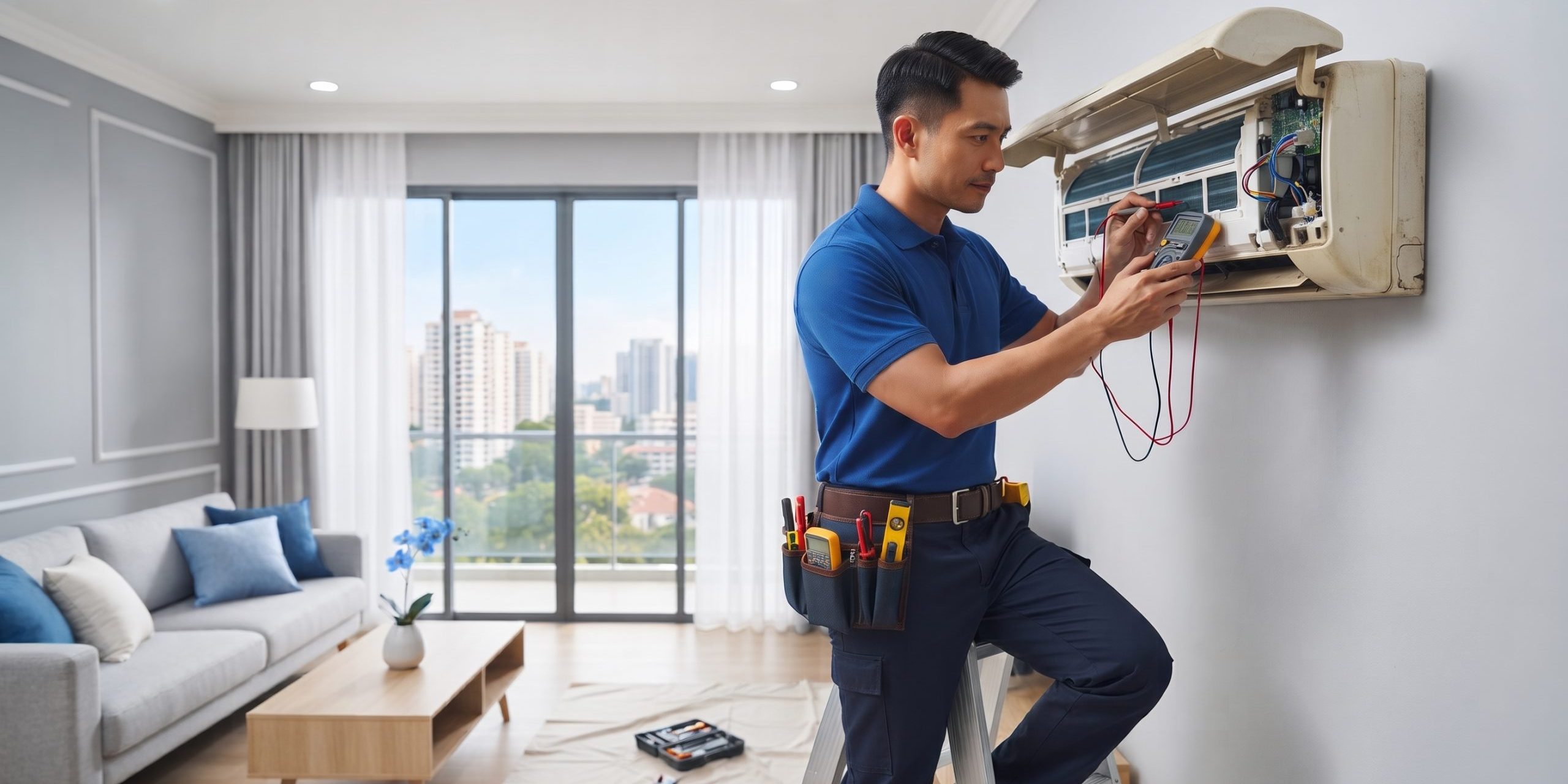
A hissing sound coming from an air conditioner is a clear operational anomaly that usually indicates high-pressure gas escaping or severe pressure imbalances within the internal refrigerant loop. Ignoring a hissing sound can lead to complete compressor failure, frozen coils, higher electricity bills, and potential safety risks.
Causes & Risk Levels of Aircon Hissing
| Potential Cause | Underlying Mechanism | Severity / Risk | Required Action |
|---|---|---|---|
| Refrigerant Line Leak | High-pressure gas escaping through micro-fractures in copper piping or joints. | Critical | Turn unit off immediately; schedule leak testing and copper brazing repair. |
| Expansion Valve Malfunction | Metering device failing to regulate refrigerant liquid-to-gas flow properly. | High | Inspect expansion valve assembly and adjust or replace metering components. |
| Internal Valve Leakage | Faulty reversing valve or internal compressor seals allowing gas bypass. | High | Professional pressure audit and valve replacement by a qualified technician. |
| Compressor Over-Pressurization | Dangerous pressure buildup inside the sealed compressor housing. | Emergency | Shut off power at the circuit breaker immediately to prevent total motor burnout. |
Technical Breakdown of Key Causes
- Refrigerant Pressure Dynamics: Modern inverter air conditioners cycle refrigerant at pressures exceeding $300text{–}400text{ PSI}$. When a leak occurs, gas escapes at high velocity, creating a distinct hissing or screeching noise before dropping the system’s overall gas pressure.
- Health & Environmental Hazards: Common refrigerants (such as R32 or R410A) should not leak into enclosed living areas. Prolonged exposure in poorly ventilated rooms can cause dizziness, asphyxiation risks, or respiratory irritation.
- Compressor Thermal Overload: Running a hissing system with low refrigerant forces the compressor motor to work twice as hard while losing its primary cooling mechanism (the returning gas itself), ultimately leading to terminal motor burnout.
Step-by-Step Response Sequence
- Power Down the Unit Immediately: Prevent further damage.
Turn off the air conditioner using the remote control and isolate the primary power isolator switch or circuit breaker to protect the compressor from burnout. - Check for Oil Residue or Freezing Coils: Inspect for visual cues.
Inspect the copper piping and joints around the indoor and outdoor units. A refrigerant leak often leaves a oily residue or causes sudden ice formation on the evaporator coils. - Do Not Attempt Manual Gas Topping Up: Avoid hazardous DIY solutions.
Avoid topping up refrigerant without fixing the underlying leak first. Gas top-ups on a leaking system are ineffective and cause repeated gas loss. - Contact Certified Technicians for Pressure Testing: Professional intervention.
Engage a certified professional to conduct nitrogen pressure testing, identify copper fractures, re-braze joints, and re-charge refrigerant to factory specifications.
Professional Aircon Diagnostic & Repair Services
A hissing air conditioner requires immediate professional attention to restore safe, efficient cooling.
At Aircon Servicing & Repair Singapore, our certified engineering team specializes in gas leak detection, copper pipe repair, compressor diagnostics, and full chemical overhauls across Singapore.
- Company Name: Aircon Servicing & Repair Singapore
- Address: 269 Bukit Batok East Ave 4, Singapore 650269
- Phone: +65 9855 3721
- WhatsApp Direct: Click Here to Message Us Directly on WhatsApp