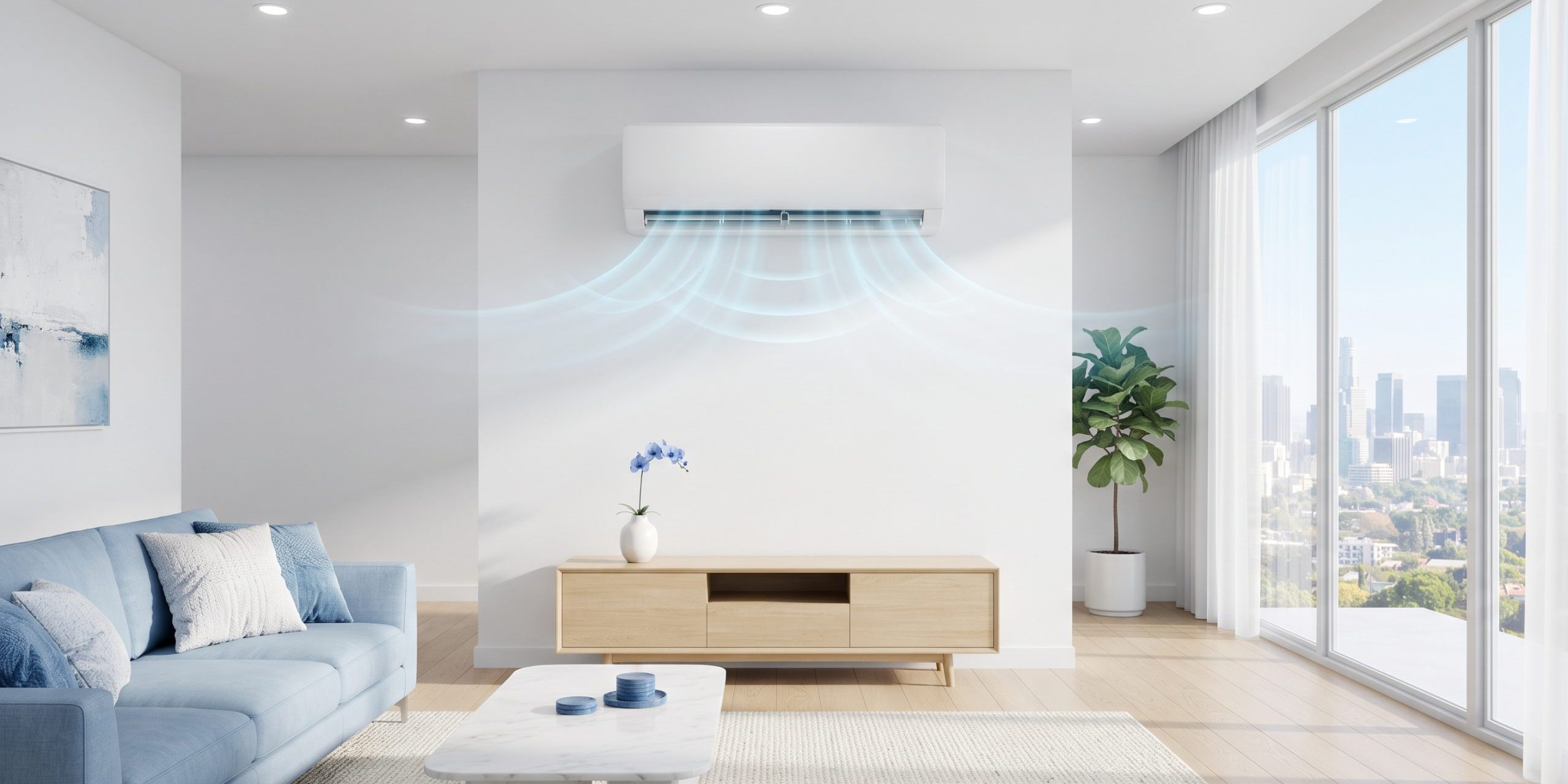
Selecting the right air conditioner requires evaluating key technical features that impact energy consumption, cooling performance, and indoor air hygiene. Investing in modern inverter technology and proper filtration ensures long-term efficiency and significantly lower utility bills.
Aircon Feature Evaluation & Selection Matrix
| Key Feature | Operational Technology | Primary Benefit |
|---|---|---|
| Inverter Compressor | Variable-speed motor adjusts power dynamically instead of cycling ON/OFF. | Saves up to 30%–50% in electricity; maintains a precise room temperature without fluctuations. |
| Energy Efficiency Rating | High Seasonal Energy Efficiency Ratio (SEER / NEA 5-Tick Rating). | Maximizes cooling output per watt consumed, drastically lowering monthly power costs. |
| Air Filtration Systems | Built-in HEPA, plasma ionizers, or anti-bacterial filters. | Traps particulate matter ($text{PM}_{2.5}$), pollen, and airborne bacteria for cleaner indoor air. |
| Smart / Wi-Fi Control | Mobile application integration, timer scheduling, and energy usage tracking. | Allows pre-cooling, remote shutdown, and precise monitoring of electricity usage. |
| Dehumidification (Dry Mode) | Operates compressor at lower fan speeds to extract ambient moisture. | Reduces humidity without over-cooling, preventing mold growth in humid climates. |
| Low Noise Rating (<22 dB) | Brushless DC motors and aerodynamically designed fan blades. | Ensures whisper-quiet performance suitable for bedrooms, nurseries, and home offices. |
Core Selection Criteria Explained
- Inverter vs. Non-Inverter: Non-inverter systems run at full capacity until reaching target temperature, shut off completely, and restart when the room warms up—causing high power spikes. Inverter systems continuously regulate motor speed to conserve power once the room reaches the setpoint.
- Sizing & Capacity (BTU): Matching unit capacity to room area is critical. An undersized unit runs continuously without reaching setpoint, while an oversized unit cools too quickly without removing humidity, leaving the room cold and sticky.
- Corrosion Protection (Blue / Gold Fin): For seaside or tropical environments, anti-corrosive coatings on outdoor condenser coils protect against rust, saltwater erosion, and environmental degradation.
Step-by-Step Sequence for Purchasing the Right System
- Calculate Required BTU Capacity: Match capacity to space.
Determine total floor area and sun exposure. Standard bedrooms require $9,000text{–}12,000text{ BTU}$, while living spaces require $18,000text{–}24,000text{ BTU}$. - Verify Energy Efficiency Ticks: Prioritize long-term savings.
Select models with high energy efficiency ratings (e.g., 5-Tick rating in Singapore) to ensure lower long-term operating costs. - Check Smart Connectivity and Noise Levels: Assess lifestyle needs.
Ensure the unit operates under $22text{ dB}$ for bedrooms and includes smart app integration if remote temperature control and scheduling are needed. - Review Warranty Terms & After-Sales Support: Protect your investment.
Verify manufacturer warranty coverage—look for at least 1 year on internal parts/labor and 5 years on the compressor.
Professional Aircon Servicing & Installation
Even the most advanced air conditioner requires proper professional installation and regular routine maintenance to perform at its peak.
At Aircon Servicing & Repair Singapore, our certified engineering team provides system selection consultations, professional multi-split installations, general servicing, chemical overhauls, and gas leak repairs across Singapore.
- Company Name: Aircon Servicing & Repair Singapore
- Address: 269 Bukit Batok East Ave 4, Singapore 650269
- Phone: +65 9855 3721
- WhatsApp Direct: Click Here to Message Us Directly on WhatsApp