In Singapore, year-round high temperatures and heavy atmospheric humidity make air conditioning indispensable. Unlike seasonal environments where units rest during winter, Singaporean air conditioners run continuously. This relentless operational load, paired with moisture-rich air, accelerates wear and tear, reduces cooling performance, and breeds internal bio-contamination.
The Double Attack: Constant Heat & High Humidity
Singapore’s tropical climate challenges air conditioning systems through two primary environmental mechanisms:
- Continuous Thermal Strain (Extreme Heat):
- The Cause: Constant exposure to ambient temperatures averaging 31°C–33°C forces compressors and fan motors to run extended cycles.
- The Consequence: Mechanical strain leads to component overheating, elevated energy consumption, and premature motor failure without proper lubrication and cooling checkups.
- Persistent Moisture Accumulation (High Humidity):
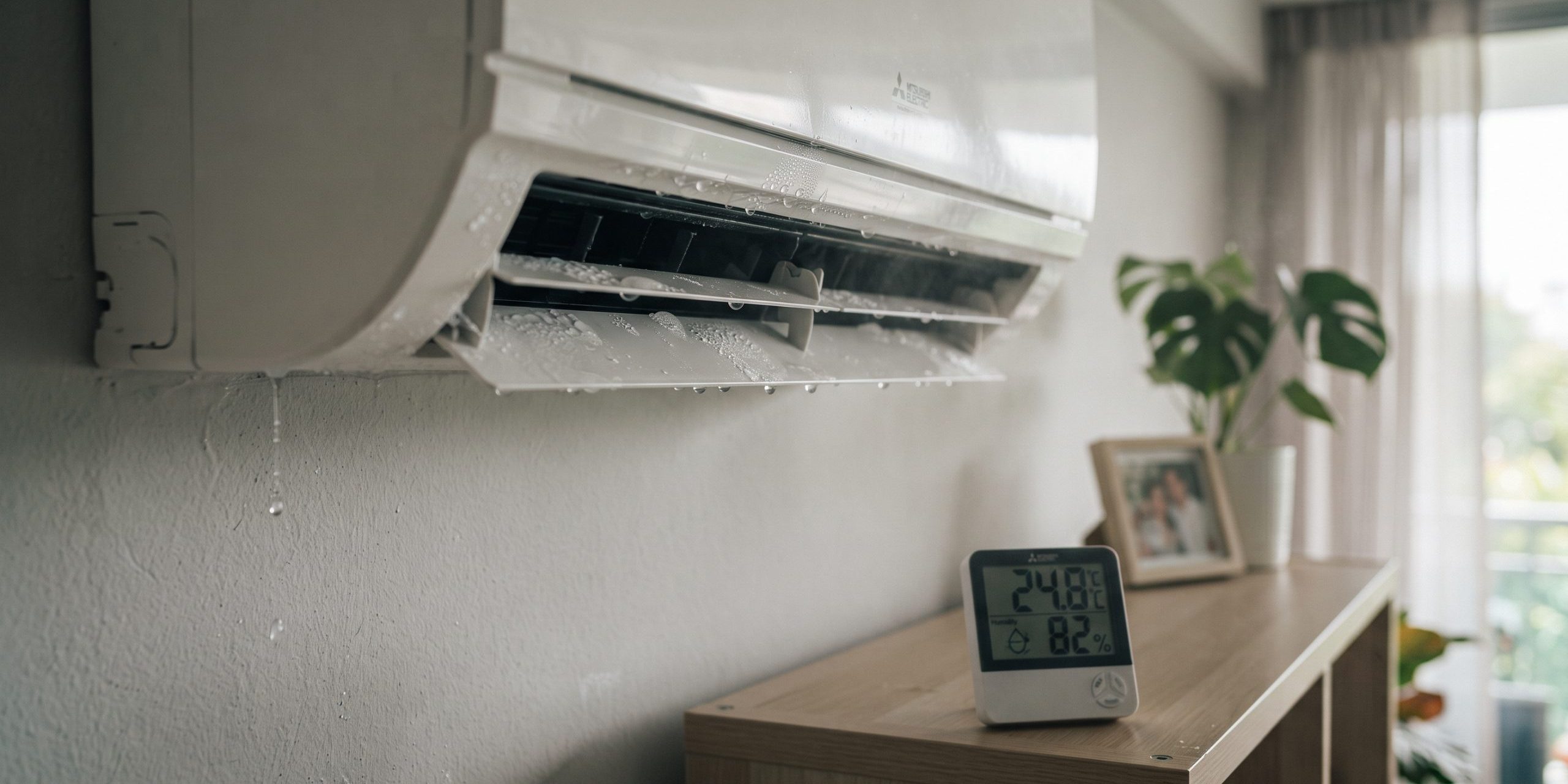
- The Cause: Air conditioners act as dehumidifiers, extracting liters of condensation from the air daily.
- The Consequence: Dark, damp internal environments encourage rapid growth of mold, mildew, and bacterial bio-slime inside the condensate drain pan, blower wheel, and evaporator coils.
Consequences of Skipping Servicing in Tropical Climates
- Mold & Bacterial Circulation: Spores growing on damp coils blow directly into living spaces, causing musty odors, triggering respiratory issues, and worsening allergies.
- Clogged Drainage & Water Leaks: Accumulations of dust and fungal slime create thick blockages in the condensate drain line, forcing water to back up and overflow onto interior walls and flooring.
- Reduced Efficiency & Spiked Energy Bills: Layered dirt and grime on copper coils impede thermal exchange, making the compressor work up to 20% harder to achieve standard indoor temperatures.
- Severe System Failure: Unresolved airflow restrictions and electrical strain cause major failures, including shorted printed circuit boards (PCBs) or compressor burnouts.
Maintenance Matrix: Safe DIY Tasks vs. Professional Servicing
Maintaining peak cooling efficiency requires a balance between routine home maintenance and technical servicing:
| Issue / Task | Safe DIY Maintenance | Professional Service Needed |
| Dust Accumulation | Wash and dry indoor mesh filters every 2–4 weeks under tap water. | Deep-clean clogged internal fan blower wheels and evaporator coil fins. |
| Mold & Musty Smells | Wipe exterior air louvers and housing with a clean microfiber cloth. | Perform chemical flushing/overhaul to sanitize hidden fungal growth on coils. |
| Water Leakage | Ensure the visible indoor drainage hose is not kinked or restricted. | Flush blocked drain pipes with high-pressure water jets and clear bio-slime traps. |
| Weak Cooling / Warm Air | Check remote control settings (ensure set to COOL mode at 24°C–25°C). | Inspect refrigerant pressure, detect copper pipe leaks, and top up gas levels. |
| Outdoor Unit Noise / Heat | Maintain 2 feet of clear space around the condenser for proper airflow. | Clean outdoor condenser coils, check electrical capacitors, and inspect fan motors. |
Actionable Maintenance Tips for Singapore Homeowners
- Clean Air Filters Bi-Weekly: Prevents surface dust from entering the internal chassis and restricting airflow.
- Run Dry Mode Periodically: Utilizing your aircon’s “Dry Mode” helps extract excess room moisture efficiently during heavy rain periods.
- Schedule Regular Professional Checks: Arrange comprehensive quarterly servicing to maintain optimal power consumption and safeguard indoor air quality.
Need Professional Aircon Servicing in Singapore?
Protect your air conditioner from tropical wear and tear. Our certified technicians provide deep chemical washing, leak repairs, and general servicing tailored to Singapore’s demanding weather conditions.
Contact Our Experts Today:
- Company Name: Aircon Servicing & Repair Singapore
- Address: 269 Bukit Batok East Ave 4, Singapore 650269
- Phone: +65 9855 3721
- WhatsApp: Chat on WhatsApp