Which Aircon Mode Should You Use? Complete Singapore Guide (2026)
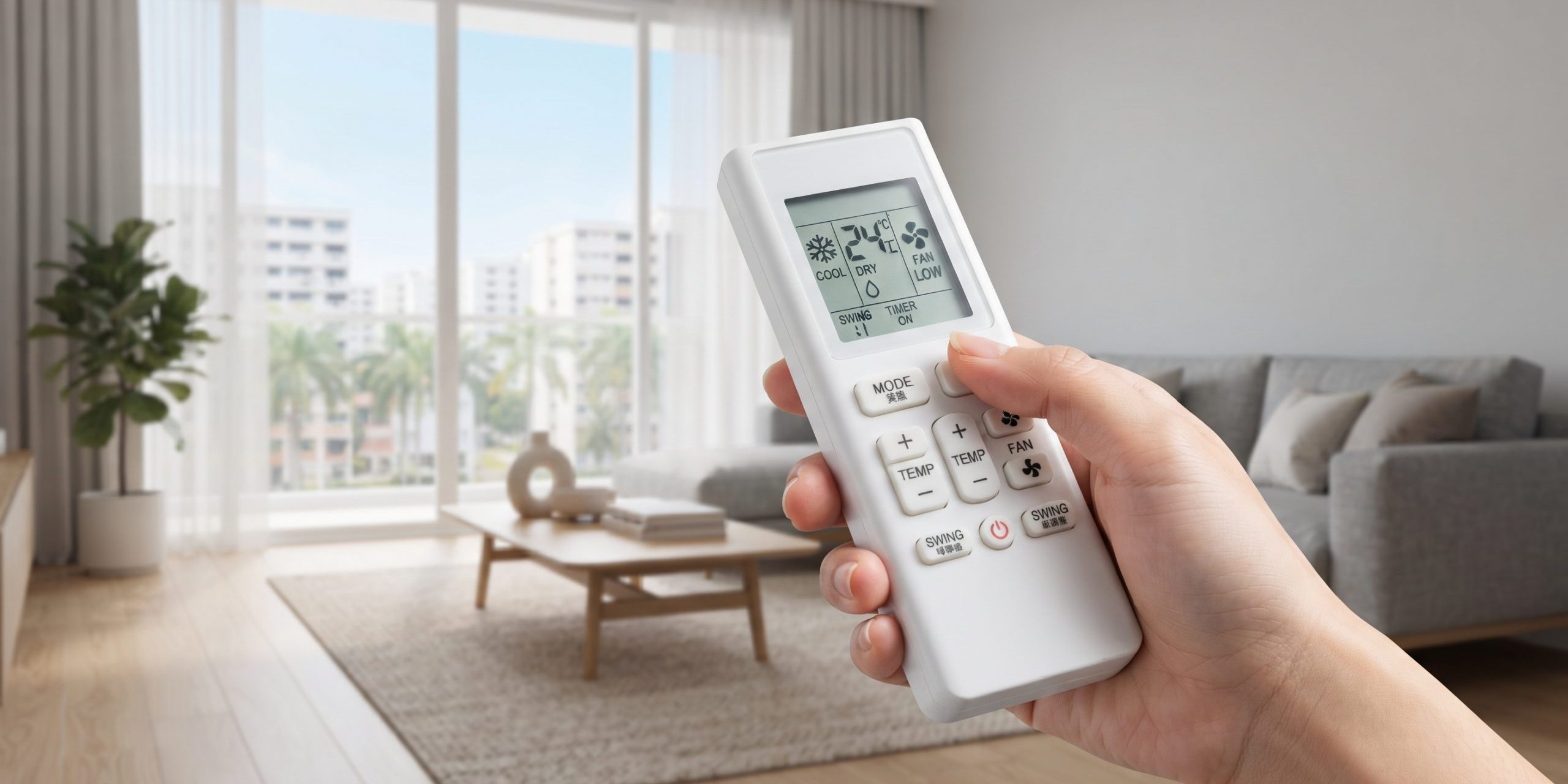
The buttons on your aircon remote control far more than just room temperature. Modern air conditioners in Singapore come with multiple operating modes—including Cool, Dry, Fan, and Auto—alongside brand-specific features like Eco, Sleep, and Powerful. Selecting the right mode for the right weather condition is essential for controlling your SP Group electricity bills and keeping your home comfortable.
Quick Aircon Mode Guide for Everyday Singapore Weather
- Hot & Humid Afternoon (Typical SG Weather): Use Cool Mode at 25°C–26°C with fan speed set to High.
- Warm & Very Humid (Post-Rain / Evenings): Use Dry Mode at 26°C–27°C.
- Overnight Sleeping: Use Sleep Mode or Dry Mode at 26°C–27°C.
- Rapid Cooldown (First 10–15 mins): Use Powerful / Turbo / Jet Mode then revert to Cool Mode.
- Cool Evening Airflow: Use Fan Mode (compressor remains OFF).
Standard Aircon Modes Explained
- Cool Mode (Snowflake Icon): Actively lowers the room temperature by running the compressor at full capacity or variable inverter speeds. Best for hot afternoons.
- Tip: Setting the temperature to 18°C does not cool the room faster than 25°C; it simply forces the compressor to run continuously without stopping, unnecessarily inflating your electricity bill.
- Dry Mode (Water Drop Icon): Functions primarily as a dehumidifier by running the blower wheel slower. It lowers indoor relative humidity from 80–90% down to 50–60% RH. Because sweat evaporates effectively in drier air, a room at 27°C on Dry Mode often feels cooler and fresher than 24°C on Cool Mode, while consuming 20–30% less electricity.
- Fan Mode (Fan Icon): Runs only the indoor blower fan while keeping the outdoor compressor powered off. Draws minimal electricity (~30W–80W) and is ideal for circulating air on cooler evenings.
- Auto Mode: The system’s PCB automatically switches between Cool, Dry, and Fan based on thermistor temperature readings. However, because basic sensors cannot detect humidity, Auto Mode often overuses Cool Mode compared to manual selection.
Estimated Daily Running Costs by Mode (9,000 BTU Inverter Unit)
Based on 8 hours of daily operation at standard Singapore residential electricity tariffs:
| Operating Mode & Setting | Average Power Draw | Daily Cost (Est.) | Monthly Cost (Est.) |
|---|---|---|---|
| Cool Mode (22°C, Fan High) | ~900 W | ~$2.14 | ~$64.20 |
| Cool Mode (25°C, Fan High) | ~650 W | ~$1.55 | ~$46.50 |
| Dry Mode (25°C–26°C) | ~400 W | ~$0.95 | ~$28.50 |
| Sleep Mode (Rises to 27°C) | ~450 W | ~$1.07 | ~$32.10 |
| Fan Mode Only | ~50 W | ~$0.12 | ~$3.60 |
Brand-Specific Advanced Modes
- Mitsubishi (Econo Cool): Automatically shifts setpoints up by 2°C in cycles while adjusting louver airflow, saving up to 20% power with no noticeable difference in comfort.
- Daikin (Powerful Mode): Runs the compressor at absolute maximum capacity for 20 minutes to rapidly cool down hot rooms before automatically reverting to standard settings.
- Samsung (WindFree Mode): Disperses cool air through micro-holes to maintain room temperature without direct cold air drafts, saving up to 30–70% energy in steady-state operation.
- Panasonic (ECONAVI / Eco Mode): Uses human activity sensors to reduce cooling output when the room is empty.
DIY Usage vs. Professional Maintenance Matrix
| Issue / Goal | Homeowner Best Practice (DIY) | Professional Technical Solution |
|---|---|---|
| High Electricity Bills | Shift from Cool Mode (22°C) to Dry Mode (26°C) or Cool (25°C). | Inspect system gas pressure, clean coils, and restore motor efficiency. |
| Unit Not Cooling in Cool Mode | Clean washable air filters every 2–4 weeks. | Conduct pressure tests, repair gas leaks, and replace faulty capacitors/sensors. |
| Musty Odours in Dry Mode | Run Fan Mode for 15 minutes before shutting off to dry internal coils. | Perform a chemical wash or overhaul to clear mould and bacterial sludge in drip pans. |
| Unresponsive Remote / Mode Lock | Replace remote batteries and reset power isolator switch. | Replace faulty signal receiver boards or repair indoor unit PCB controls. |
Need Professional Aircon Service in Singapore?
If your air conditioner fails to cool properly regardless of the remote mode selected, your unit may require professional maintenance, a chemical wash, or a technical inspection.
Contact Our Experts Today:
- Company Name: Aircon Servicing & Repair Singapore
- Address: 269 Bukit Batok East Ave 4, Singapore 650269
- Phone: +65 9855 3721
- WhatsApp: Chat on WhatsApp