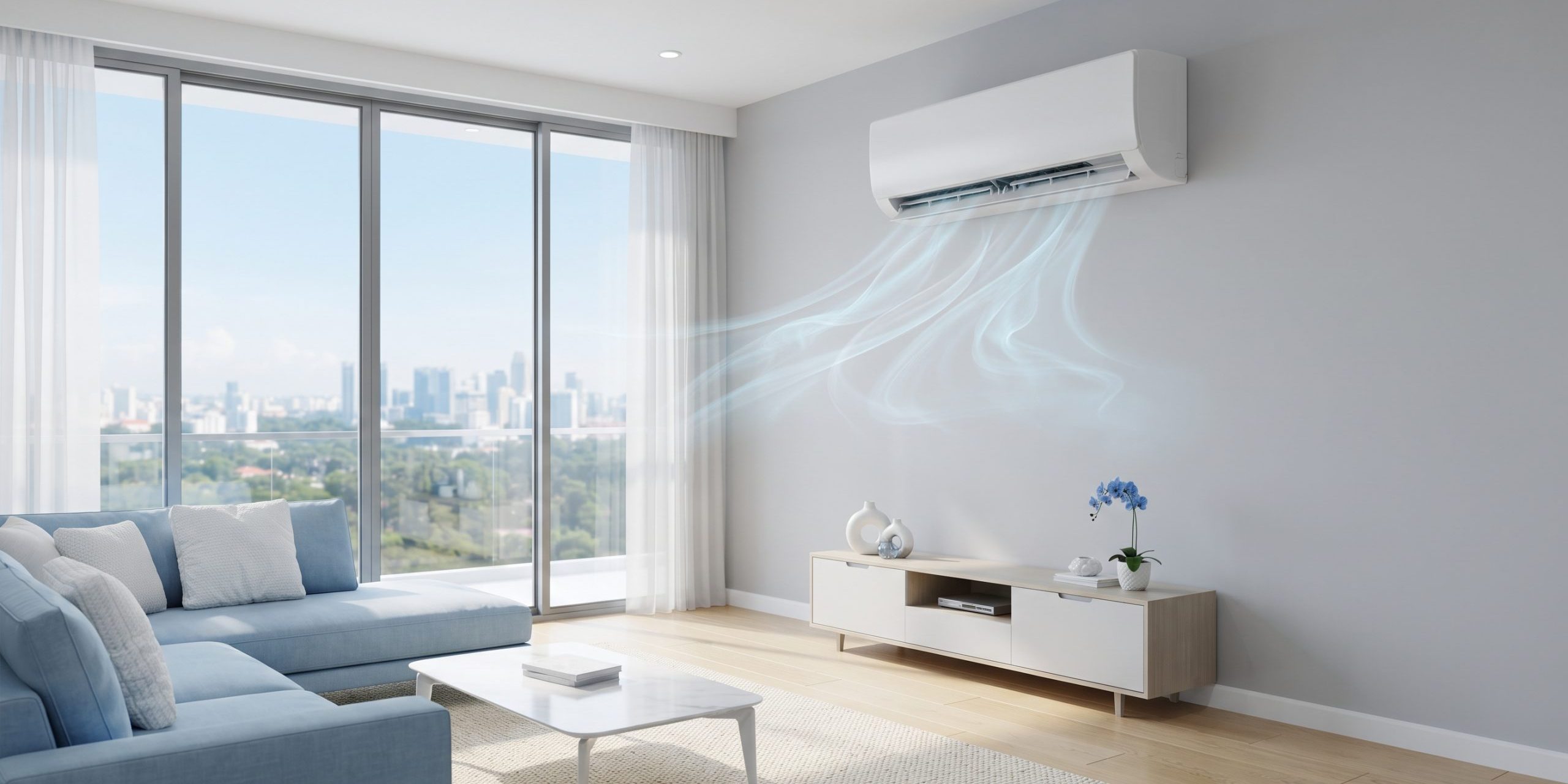
Modern air conditioners operate as comprehensive environmental control systems. Beyond basic temperature reduction, they regulate humidity, purify indoor air, protect building materials, and optimize human thermal comfort through precise thermodynamic processes.
Core Functional Capabilities of Air Conditioning Systems
| Function / Capability | Thermodynamic Mechanism | Primary Benefit |
|---|---|---|
| Sensible Heat Reduction | R-32/R-410A refrigerant absorbs heat at the indoor evaporator coil and transfers it outside. | Maintains target indoor temperature regardless of external weather conditions. |
| Latent Heat Removal (Dehumidification) | Moisture in ambient air condenses into liquid water on the cold evaporator coils and drains away. | Prevents relative humidity ($text{RH}$) from exceeding 60%, inhibiting mold, bacteria, and dust mites. |
| Particulate Air Filtration | Recirculated air passes through mechanical mesh, HEPA, or electrostatic ionizer filters. | Traps dust particles, allergen proteins, smoke residue, and pet dander. |
| Equipment & Furniture Protection | Maintains consistent environmental conditions, eliminating high heat and excess moisture. | Prevents thermal degradation of microchips in electronics and warping in timber flooring. |
| Acoustic Isolation | Allows doors and windows to remain fully sealed while continuously conditioning air. | Reduces external ambient street, traffic, and urban noise transmission indoors. |
Thermodynamic Principles Behind Air Conditioning
- Refrigerant Phase Change Cycle: Air conditioners do not “create” cold air; they extract thermal energy from indoor spaces. Liquid refrigerant expands into a low-pressure gas in the indoor evaporator coil to absorb indoor heat, then gets compressed into a high-pressure gas outdoors to release that heat.
- Psychrometric Moisture Extraction: Warmer air holds more gaseous water vapor. As warmer room air passes over the chilled evaporator coil (which sits below the dew point), excess moisture condenses into liquid, effectively drying and cooling the air simultaneously.
- Inverter Power Modulation: Inverter compressors dynamically speed up or slow down based on cooling demand, eliminating high current surges and maintaining room temperature within $pm0.5^circtext{C}$ of the setpoint.
Step-by-Step Sequence to Maximize System Capabilities
- Set Louvers and Fan Speed Appropriately: Optimize airflow dynamics.
Direct cool airflow upward or horizontally so denser cold air sinks naturally across the room, ensuring even temperature distribution. - Use Dry Mode During High-Humidity Days: Manage relative humidity.
Switch the aircon to “Dry Mode” during rainy seasons to maximize moisture removal while consuming less electrical power than standard cooling modes. - Clean Dust Filters and Anti-Bacterial Strips: Protect air quality.
Wash primary mesh filters every 2 weeks to ensure unrestricted airflow, prevent evaporator coil icing, and maintain air purification efficiency. - Schedule Professional Servicing and Chemical Cleaning: System longevity.
Engage certified technicians for quarterly servicing to clear drainage trays, inspect refrigerant gas levels, and deep-clean fan blower wheels.
Professional Aircon Servicing & Care
To keep your air conditioner performing all of its cooling, filtering, and dehumidifying functions at peak efficiency, regular maintenance is essential.
At Aircon Servicing & Repair Singapore, our engineering team offers comprehensive general servicing, chemical flushing, gas top-ups, and troubleshooting for both residential and commercial units across Singapore.
- Company Name: Aircon Servicing & Repair Singapore
- Address: 269 Bukit Batok East Ave 4, Singapore 650269
- Phone: +65 9855 3721
- WhatsApp Direct: Click Here to Message Us Directly on WhatsApp