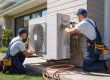


Call a licensed 24-hour aircon company directly through their emergency hotline, check Google Maps for verified “24-hour aircon repair near me” results, or contact specialists who guarantee same-day emergency response. The best emergency services in Singapore offer response times of under 2 hours, transparent pricing, NEA-licensed technicians, and no hidden surcharges. Expect to pay 30-50% more for after-hours service, but quality providers include this in their upfront quotes rather than surprising you with bills later.

What Qualifies as an Emergency AC Repair?
Real emergencies involve immediate health risks, property damage, or complete system failure during extreme weather. Your aircon leaking water onto expensive equipment or electrical outlets counts as an emergency. So does a complete breakdown during a heatwave, when indoor temperatures hit 32°C or higher, especially if you have elderly family members, young children, or medical conditions that are affected by heat.
These situations justify calling for after-hours repair:
- Water leaking from indoor unit onto floors, walls, or electronics
- Burning smell or smoke coming from the aircon unit
- Loud grinding, squealing, or banging noises that started suddenly
- Complete system failure during temperatures above 30°C
- Refrigerant leak with visible ice buildup on pipes
- Electrical issues like tripped breakers or sparking from the unit
These can wait until regular business hours:
- Weak airflow or reduced cooling that developed gradually
- Normal wear sounds like clicking during startup
- Remote control not working (you can use manual controls)
- Minor temperature inconsistencies between rooms
- Scheduled maintenance or filter cleaning
Don’t waste money on emergency rates for routine issues. A professional emergency service will tell you honestly whether your problem can wait until morning, helping you save 30-50% on your final bill.
What Makes a Reliable 24-Hour Emergency AC Service?
The best emergency aircon companies share five critical characteristics. First, they maintain genuine 24/7 availability with technicians on standby, not just an answering service that takes messages. Second, they employ NEA-licensed technicians who can legally handle refrigerants and perform complex repairs. Third, they provide transparent pricing upfront before dispatching technicians, so you know exactly what you’ll pay.
Fourth, they guarantee response times under 2-3 hours for genuine emergencies. Some companies promise 4-6 hour windows, but when your aircon is flooding your bedroom at midnight, you need faster help. Fifth, they stock standard parts in their service vehicles so repairs can be completed on the first visit, eliminating the need for return trips.
Look for these specific credentials:
- BCA-registered contractor license for air conditioning work
- NEA refrigerant handling licenses for all technicians (not just supervisors)
- Public liability insurance covering property damage during repairs
- Minimum 5 years of operating history in Singapore
- Verified customer reviews on Google with 4.5+ star ratings
Companies without proper licensing can’t legally work on your aircon’s refrigerant system. If something goes wrong, you’ll have no recourse and might face additional costs hiring licensed contractors to fix botched repairs.
The difference between average and excellent emergency service shows up in response quality. Top-tier companies don’t just send anyone available. They dispatch experienced technicians who’ve handled similar emergencies hundreds of times and can diagnose problems accurately under pressure.
READ MORE: How Much Does Commercial Aircon Replacement Cost in Singapore?
How Much Does Emergency AC Repair Cost After Hours?
Reputable emergency services charge $80-$120 for after-hours callouts, which covers the first hour of diagnosis and travel. This rate should be clearly stated when you book, not revealed after the technician arrives. Common emergency repairs with honest, transparent pricing look like this:
- Compressor replacement: $450-$800 (includes part, labor, refrigerant)
- Refrigerant leak repair + gas top-up: $280-$450 (includes leak detection and sealing)
- Fan motor replacement: $250-$400 (includes genuine or quality compatible part)
- PCB board replacement: $200-$350 (includes programming and testing)
- Drainage pipe clearing: $100-$180 (includes cleaning and anti-bacterial treatment)
The best companies waive the callout fee when you proceed with repairs over $200. This means your total cost only covers the actual fix, not the emergency visit. Some providers advertise this policy upfront to build trust. Others keep it quiet, and you have to ask.
Weekend rates at premium emergency services stay consistent with weeknight pricing because they plan for weekend demand. Budget companies that don’t maintain proper 24/7 staffing often add 10-20% weekend surcharges, then another 20-30% for public holidays. Over a year, choosing a company with flat emergency pricing saves you money if you ever need multiple urgent repairs.
Get everything in writing before work begins. The best technicians show you a printed rate card or tablet with fixed pricing for common repairs. They’ll explain what’s wrong, show you the faulty component if possible, and give you options. Anything over $400 should come with choices like “repair now”, “temporary patch”, vs “wait for business hours.”
Quality emergency services include 30-90 day guarantees on after-hours repairs. If the same problem returns within that window, they’ll fix it for free. This guarantee matters because rushed nighttime repairs sometimes need adjustment once you’ve run the system for a few days.
What Should You Ask When Calling for Emergency Service?
Start by describing your problem specifically. “My aircon is leaking water onto my laptop” gets faster help than “my aircon is broken.” The dispatcher needs to know whether you’re facing property damage (immediate response) or just discomfort (can wait a few hours).
Critical questions to ask before booking:
- What’s your guaranteed arrival time? (Anything over 3 hours isn’t really emergency service)
- What’s the total callout fee, including GST? (Should be $80-$120, clearly stated)
- Do you waive the callout fee if I proceed with repairs? (Best companies do this)
- Are your technicians NEA-licensed to handle refrigerants? (Required by law)
- Can you provide an estimate based on my description? (Shows experience and transparency)
- What payment methods do you accept? (Credit card acceptance indicates legitimate business)
Top emergency services answer these questions immediately. Their dispatchers have heard thousands of issues and can provide accurate estimates over the phone. If someone can’t tell you roughly what a compressor replacement costs at 11 pm, they’re either inexperienced or hiding pricing until they’ve got a technician at your door.
Ask about their vehicle tracking if they offer it. Some premium services send you a link to track your technician’s arrival in real-time, just like food delivery apps. This transparency shows operational excellence and saves you from waiting by the door for 3 hours.
Request the technician’s name and mobile number. Professional services provide this automatically, so you can coordinate access if you live in a condo with security or need to step out briefly. It also creates accountability, as the specific technician is responsible for the repair’s quality.
What Information Speeds Up Emergency Dispatch?
Have these details ready before calling:
- Your complete address, including unit/floor number and any access codes
- Aircon brand and model (check the sticker on the indoor unit, or send a photo via WhatsApp if the company accepts them)
- Specific problem description with timing (when did it start, what happened right before)
- Whether you’re under warranty and with which company
- Your availability for the next 3-4 hours
Mention access restrictions upfront. Gated condos, buildings requiring security clearance, narrow stairways, or outdoor units requiring ladder access all affect how quickly technicians can reach you. The best companies maintain relationships with central condo management offices and already have security clearances for popular buildings.
Send photos or videos of the problem via WhatsApp. Seeing water pooling around your unit or hearing the grinding noise helps experienced technicians bring the right parts on the first trip. Some issues can even be diagnosed remotely, potentially saving you the emergency callout entirely.
Premium emergency services maintain customer databases. If you’ve used them before, they’ll have your address, aircon details, and service history on file. This cuts booking time from 5-10 minutes down to 2 minutes and ensures they send a technician familiar with your building or aircon model.
What Should You Do While Waiting for the Technician?
Turn off your aircon immediately if you smell burning, see smoke, or notice sparking. Don’t just switch the remote off. Go to your electrical panel and flip the breaker for that aircon circuit. Continuing to run a failing unit can destroy the compressor or start an electrical fire.
For water leaks, place towels or containers under the dripping area. Move electronics, important documents, and anything valuable away from the leak zone. Don’t try to open the unit yourself or stick anything into the drainage pipe. You might make it worse or void your warranty.
If the unit stopped working, but there’s no immediate danger:
- Check your electrical panel for tripped breakers (reset them if tripped)
- Look at the remote display for error codes and write them down
- Take clear photos of any visible problems (ice buildup, water stains, damaged components)
- Note the unit’s age and when it was last serviced
- Remember what you were doing when the problem started
This information helps technicians diagnose faster when they arrive. The best ones will actually ask you these questions over the phone because it saves diagnostic time on-site. Some common problems, like tripped breakers or clogged filters, can be fixed over the phone, saving you the entire callout fee.
Open windows and use standing fans for ventilation while you wait. During extreme heat, move to the coolest room, drink water, and avoid cooking or using heat-generating appliances. If you have elderly family members or young children, consider whether they need to move in with a relative temporarily. A good emergency service dispatcher will give you honest advice about whether waiting is safe or if you should make alternative arrangements.
Premium services send you a confirmation SMS with the technician’s name, estimated arrival time, and direct contact number. You’ll get updates if they’re running early or late. This level of communication separates professional operations from companies that treat emergencies casually.
How Can You Prevent Future Emergency Breakdowns?
Regular maintenance prevents 70% of emergency calls, according to industry data. The best approach combines monthly self-checks with quarterly professional servicing. This catches developing problems before they become midnight emergencies.
Critical maintenance that stops after-hours disasters:
- Clean or replace filters monthly – Clogged filters cause 40% of emergency compressor failures
- Check drainage pipes quarterly – Most water leak emergencies start with slowly developing clogs
- Schedule professional service every 3 months – Technicians catch refrigerant leaks, worn bearings, and electrical issues early.
- Clear outdoor unit surroundings – Blocked airflow causes overheating and sudden shutdowns
- Monitor cooling performance weekly: a gradual 20-30% decline in effectiveness signals problems.
A quality service provider offers maintenance contracts that include priority emergency response. When you’re a maintenance customer, you get bumped to the front of the queue for after-hours calls. During peak emergency periods (hot weekends in June-August), this priority access can mean the difference between 2-hour and 6-hour wait times.
Maintenance contracts with the best companies include benefits worth paying for:
- Unlimited emergency callouts with waived service fees
- 20-30% discounts on parts and labour for any repairs
- Priority scheduling within 1-2 hours, even during peak times
- Free annual chemical cleaning (worth $80-$120)
- Extended warranties on repairs performed during maintenance
Watch for warning signs between services. Strange smells (except burning), gradually weakening airflow, unusual sounds, or reduced cooling efficiency all indicate problems. Address these during business hours at standard rates, rather than waiting for complete failure at midnight.
Keep your service provider’s emergency number saved in your phone. The best companies give you a direct technician hotline that bypasses general customer service. When you’re dealing with water flooding your bedroom at 2 am, you don’t want to navigate phone menus.
Can You Use Warranty or Insurance for Emergency Repairs?
Manufacturer warranties cover parts for 1-5 years, depending on brand and component. Compressors typically get 5-10 years of coverage, while other parts have shorter terms. But here’s what most people don’t know: manufacturer warranties rarely cover after-hours callout fees or emergency surcharges, even when the part replacement is free.
Savvy consumers buy extended service warranties from their installation company, not the manufacturer. These extended warranties often include emergency service coverage with waived callout fees. The best service providers structure these warranties to cover what manufacturers don’t: labor costs, after-hours charges, and unlimited service calls.
To maximize warranty value for emergencies:
- Keep warranty documentation and proof of purchase accessible (take a photo of them on your phone)
- Know which company installed your unit, because they’re often the fastest warranty service
- Understand what’s covered vs what you’ll pay out of pocket
- Ask whether emergency calls are included or just regular business hours
- Check if the warranty becomes void if you use unauthorized repair services
Home insurance policies typically exclude normal wear and tear, which is the leading cause of AC breakdowns. Insurance might cover your aircon if damage resulted from a storm, fire, or burst pipe, but not if your 8-year-old compressor just gave out.
The best approach is to choose a service company that offers comprehensive service warranties with its installations. These warranties cost $150-$300 annually but include unlimited emergency callouts, priority response, and significant parts/labor discounts. Over a typical 10-year aircon lifespan, this coverage saves you $1,000-$2,000 compared to paying for individual emergency repairs.
What Separates Average Companies from Singapore’s Best Emergency Services?
Response time tells you everything about a company’s emergency preparedness. The best services maintain on-call technicians across Singapore’s zones (East, West, Central, North), so someone’s always within 30-45 minutes of your location. Average companies have one or two technicians covering the entire island, resulting in wait times of 3-6 hours.
Top-tier emergency services invest heavily in:
- Fully stocked service vehicles – They carry 80-90% of standard parts, so repairs are completed on the first visit
- Continuous technician training – Monthly updates on new aircon models and repair techniques
- Real-time dispatch systems – GPS tracking and intelligent routing get technicians to you faster
- Quality parts inventory – Genuine manufacturer parts plus premium compatible alternatives
- Transparent pricing systems – Digital rate cards and instant quotes, no “let me check with my boss”
The best companies also maintain strategic parts inventory at their workshops. If your problem requires an unusual component, they can dispatch a second technician to collect it from inventory while the first technician is already at your location. This coordination cuts repair time from hours to minutes.
Communication quality separates excellent from mediocre services. Top companies:
- Answer emergency calls within 3 rings (not voicemail)
- Send confirmation SMS with technician details and ETA
- Provide 30-minute arrival window updates
- Call you when they’re 10 minutes away
- Follow up the next day to ensure everything’s working
You’ll also notice differences in how technicians present repairs. The best ones carry tablets or printed materials showing common problems and transparent pricing. They’ll photograph the faulty component, explain what failed and why, and give you options with honest advice about repair vs replacement.
Customer reviews reveal patterns. Look beyond the star rating to what people actually say. The best emergency services get consistent praise for: showing up when promised, fixing problems on the first visit, transparent pricing with no surprises, and technicians who explain things clearly without pressuring you.
What Are Your Rights During Emergency AC Repairs?
The Consumer Protection (Fair Trading) Act protects you even at 2 am. Companies must provide accurate pricing information before starting work, and they can’t charge substantially more than the quoted price. If a technician quotes $600 after the dispatcher quotes $300- $400, you can refuse service without incurring any penalty beyond the initial callout fee.
Your legal rights include:
- Written quotes before any repair work begins
- Itemized invoices showing parts, labor, and surcharges separately
- Receipts with company registration and warranty details
- Guarantee period on repairs (typically 30-90 days)
- Clear disclosure of whether parts are genuine or compatible alternatives
Don’t let anyone pressure you into immediate decisions. Professional technicians respect your need to consider options. They’ll explain what’s wrong, show you the problem if possible, outline your choices, and give you time to decide. High-pressure tactics like “it’ll explode if we don’t fix it now” or “this special rate expires in 10 minutes” are red flags.
You have the right to verify credentials. Ask to see:
- NEA refrigerant handling license (every technician needs one)
- Company business registration details
- Liability insurance coverage
- Identification with the company name and photo
The best companies have nothing to hide. Their technicians carry professional ID cards and voluntarily show licenses because they’re proud of their qualifications. If someone refuses to show credentials or gets defensive when asked, that’s your cue to end the service call.
Report problems to the Consumers Association of Singapore (CASE) at 6100-0315. Common complaints include surprise charges not mentioned at the time of booking, unnecessary repairs, pressure tactics, or shoddy workmanship. CASE maintains records of problematic companies and can help mediate disputes.
How Do You Verify a Company Is Legitimate Before They Arrive?
Check the company’s website for its Unique Entity Number (UEN) and verify it on ACRA’s BizFile search at www.bizfile.gov.sg. Legitimate operations display their registration prominently. You can confirm they’re correctly licensed and haven’t been struck off.
Red flags during the initial call:
- Asking for full payment before starting work (should only collect after completion)
- Refusing to provide written estimates or company registration details
- Pressure tactics claiming immediate danger without a clear explanation
- Prices are 100-150% higher than standard emergency rates, with no justification
- Only accepting cash (professional companies take PayNow, credit cards, or bank transfers)
- Can’t provide their company’s full legal name or UEN
Real emergency service companies maintain a professional digital presence. They have Google Business profiles with dozens of verified reviews, active Facebook pages with customer interactions, and websites with clear contact information. New companies (less than 2 years old) might lack extensive reviews, but they should still have proper business registration and social media presence.
Search the company name plus “review” or “complaint” on Google before committing. Check CASE’s website for unresolved complaints. A few negative reviews aren’t unusual (some customers are unreasonable), but patterns matter. If multiple people complain about the same issue, like surprise charges or poor workmanship, believe them.
The best companies encourage you to verify their credentials. They’ll proactively send you links to their Google reviews, provide their BCA license number, and share testimonials. This transparency comes from confidence in their service quality.
When the technician arrives, verify:
- Marked the company vehicle with logo and contact details
- Uniform or company shirt with name badge
- Proper tools and equipment (not just a screwdriver and guesswork)
- Professional manner and clear communication
- Willingness to answer questions without irritation
If something feels wrong, trust your instincts. You can refuse service and pay just the callout fee. It’s better to lose $100 than commit to a $600 repair from someone you don’t trust.
What Payment Options Should Professional Services Offer?
The best emergency services accept multiple payment methods for your convenience. They understand that at 2 am, you might not have $500 in cash on hand. Professional companies offer:
- Credit/debit cards (all major providers)
- PayNow or PayLah transfers
- Bank transfers with immediate confirmation
- Company credit accounts for repeat customers
- Instalment plans for repairs over $300 (0% interest for 2-3 months)
Payment timing matters too. Reputable companies collect after completing and testing the repair, not before starting work. The only exception is the initial callout fee, which some companies collect upfront for after-hours service. Any company demanding full payment before diagnosis or repair should be avoided.
Ask about instalment options when you get a quote over $300. The best service providers partner with banks or offer their own 0% interest plans, splitting costs over 2-3 months. This makes major repairs manageable without forcing you into expensive credit card interest.
Get detailed receipts immediately. Professional companies provide itemized invoices showing:
- Service date and time
- Technician name and license number
- Specific problem diagnosed
- Parts used with brand and model numbers
- Labor hours and rates
- Warranty period for the repair
- Company UEN and contact information
Save these receipts digitally. Take a photo of them with your phone right away, because thermal paper receipts fade over time. You’ll need them if a warranty claim arises or if you want to file a claim under insurance or credit card purchase protection.
The most customer-focused companies send digital invoices via email or SMS within 24 hours. This provides permanent records without worrying about lost paper receipts. They’ll also update their customer database with repair history, making future service calls smoother.
Key Takeaways for Emergency AC Repair After Hours in Singapore
- Choose emergency services with guaranteed response times under 2-3 hours, not vague “as soon as possible” promises.
- Verify that companies employ NEA-licensed technicians with BCA registration before booking any emergency service.
- Expect transparent pricing of $80-$120 for after-hours callouts, with top providers waiving fees when repairs exceed $200
- Real emergencies include water leaks causing property damage, burning smells, and complete system failure during temperatures above 30°C
- Professional services maintain fully stocked vehicles and complete 80-90% of repairs on the first visit, without return trips.
- Maintenance contracts with priority emergency response save $1,000-$2,000 over a typical 10-year aircon lifespan.
- The best companies offer multiple payment options, including instalment plans for repairs over $300 at 0% interest.
- Regular servicing every 3 months prevents 70% of emergency breakdowns by catching minor problems before they become costly urgent repairs.