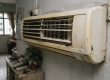
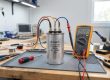
In Singapore’s tropical climate, an inefficient air conditioner rapidly degrades indoor comfort and drives up monthly electricity bills. A common misconception among homeowners is that aircon refrigerant is a consumable supply that depletes over time. In reality, modern split systems operate on a closed-loop thermodynamic cycle; refrigerant gas does not “run out”—it only escapes through a breach or leak.
Key Signs: Low Gas vs. Poor Airflow
Because a dirty coil/filter produces symptoms nearly identical to low refrigerant, it is critical to distinguish between airflow restriction and a loss of system pressure.
| Observation Parameter | Low Refrigerant Level | Dirty Filter / Blocked Coil |
| Indoor Evaporator Coil | Frost or ice layer forming on copper headers. | Heavy layer of dust, lint, or fungal growth. |
| Outdoor Unit Line Valves | Ice accumulation on the small liquid (high-pressure) line valve. | Warm or sweating pipes without physical ice formation. |
| System Cycle Time | Compressor runs continuously without reaching setpoint temperature. | System short-cycles due to thermal cutoff or poor airflow. |
| Airflow Output | Normal fan blowing volume, but air temperature remains ambient/lukewarm. | Reduced, weak, or restricted airflow velocity. |
| Audible Symptoms | Hissing or gurgling sounds near joints, valves, or coil connections. | Loud humming or strain from the cross-flow fan blower. |
Recommended Diagnostic and Repair Flow
1.Perform Primary Airflow Check & Filter Cleaning:Rule out airflow restriction.
Clean the mesh filters and inspect the indoor blower wheel. Run the unit for 24 hours to see if cooling efficiency is restored before requesting gas service.
2.Conduct Nitrogen Pressure Leak Testing:Isolate system breach.
Engage a certified technician to pressurize the copper piping loop with dry nitrogen gas. This pinpoints precise leak locations at flare joints, service valves, or coil matrices.
3.Braze, Flare, or Replace Damaged Components:Mechanical correction.
Repair the structural leak by re-flaring pipe connections, brazing copper tube cracks, or replacing compromised valves to ensure a sealed loop.
4.Evacuate and Vacuum-Recharge to Specification:System recharge.
Perform a deep vacuum down to 500 microns to extract moisture/air, then recharge the system with the exact weight ($text{grams}$) of specified refrigerant (R32 or R410A) using a digital scale.
Standard Market Rates for Gas Top-Ups & Leak Repairs (Singapore)
Below are typical industry market rates across Singapore for residential air conditioning servicing, leak detection, and refrigerant recharging:
| Service Description | Typical Market Range (SGD) | Operational Scope & Notes |
| Diagnostic Inspection Fee | $$30 – $80$ | On-site troubleshooting; usually waived if you proceed with repair services. |
| R32 / R410A Refrigerant Top-Up | $$60 – $150$ | Pricing varies based on pressure deficit (PSI) and total gas weight required. |
| Legacy R22 Refrigerant Top-Up | $$80 – $150$ | Higher cost per kg due to phase-out restrictions under environmental regulations. |
| Nitrogen Pressure Leak Test | $$150 – $250$ | High-pressure testing to pinpoint micro-leaks within the copper line setup. |
| Flare Joint / Copper Line Repair | $$150 – $350$ | Includes re-flaring joints, brazing copper tubing, vacuuming, and gas recharge. |