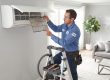
For light sleepers in Singapore, a restful night can easily be disrupted by a noisy air conditioner. Whether it is a rattling indoor fan motor, clicking relay switches, a humming compressor on the exterior ledge, or high-velocity air whistling through louvres, background noise above 22 to 25 decibels (dB) is often enough to break deep sleep cycles. Finding an ultra-quiet aircon model is essential for a peaceful bedroom environment.
This comprehensive quiet-cooling and sound-proofing guide is brought to you by Aircon Servicing & Repair Singapore, located at 269 Bukit Batok East Ave 4, Singapore 650269 (Phone: +65 9855 3721).
1. Overview of Bedroom Noise Factors & Acoustic Engineering
Understanding why air conditioners get loud and how modern inverter technology counters noise involves several key factors:
- Decibel Levels Explained: A whisper is about 30 dB, while a quiet library is around 40 dB. Premium quiet aircon units operate between 19 dB(A) to 22 dB(A) on their lowest quiet or sleep mode, making them virtually silent.
- Inverter vs. Non-Inverter Compressors: Traditional non-inverter compressors constantly turn on and off with loud clicks and surges. Inverter systems scale compressor speed smoothly up and down, eliminating abrupt startup noises.
- Blower Wheel Design: Modern cross-flow fans use wider, aerodynamic blade angles to move large volumes of air smoothly without creating turbulence or high-pitched whistling sounds.
- Vibration Isolation: Rubber compressor mounts and insulated outdoor casings prevent mechanical humming from resonating through HDB concrete walls or condo service balconies.
2. Step-by-Step Guide to Achieving a Whisper-Quiet Bedroom Setup
Follow these practical steps to optimize your bedroom for absolute quiet:
- Choose Ultra-Low Decibel Models:
- Look for premier 5-tick inverter split models (such as Mitsubishi Electric Starmex, Daikin, or Panasonic) specifically rated for ultra-low quiet mode sound output (under 21 dB).
- Proper Indoor Unit Positioning:
- Avoid mounting the indoor unit directly above the headboard of your bed. Position it on a side wall so any minor airflow sound passes overhead rather than blowing directly down.
- Isolate Outdoor Compressor Vibrations:
- Ensure your outdoor condensing unit is installed on heavy-duty rubber vibration absorbers to prevent low-frequency humming from traveling through structural walls.
- Schedule Regular Servicing:
- Dust and mold accumulation on the blower wheel throws the fan off-balance, creating a rhythmic humming or roaring sound. Regular cleaning preserves silent operation.
3. Quiet Aircon Feature & Brand Comparison Table
| Brand / Technology Feature | Minimum Noise Level (Quiet Mode) | Key Acoustic Advantage | Ideal For Light Sleepers | Estimated Price / Market Tier |
| Mitsubishi Electric (Starmex Series) | approx. 19 – 21 dB(A) | Dual barrier coating prevents dust buildup on fan blades; exceptionally smooth inverter ramp-up. | Top Choice for bedrooms and nurseries. | Mid-High Tier ($1,800 – $2,800 for System 2/3) |
| Daikin (Smile Series / Inverter) | approx. 19 – 22 dB(A) | Intelligent eye sensors and quiet-flow louvre designs minimizing wind turbulence. | Excellent for quiet, draft-free cooling. | Mid-High Tier ($1,750 – $2,700 for System 2/3) |
| Panasonic (Inverter w/ Nanoe-G) | approx. 20 – 23 dB(A) | Balanced cross-flow fan design paired with silent air purification cycles. | Great for allergy sufferers who need quiet air. | Mid Tier ($1,650 – $2,550 for System 2/3) |
| Standard / Budget Aircon Brands | approx. 28 – 35 dB(A) | Basic single-speed fans and louder compressor relay clicks during cycling. | Not Recommended for light sleepers. | Budget Tier ($1,100 – $1,600 for System 2/3) |
4. Safe DIY vs. Professional Noise Reduction Matrix
⚠️ IMPORTANT SAFETY WARNING
Never attempt to modify outdoor compressor brackets, open electrical inverter control boxes, or tamper with sealed refrigerant lines to fix noise issues. Always hire licensed professionals for mechanical overhaul tasks.
🟢 Safe to DIY (Homeowner Noise Checks)
- Bi-Weekly Filter Cleaning: Wash mesh air filters regularly to prevent airflow restriction, which causes the fan to strain and generate whistling noises.
- Tightening Casing Screws: Check and gently tighten loose plastic front panels or louver flaps on the indoor unit that may vibrate at high fan speeds.
- Clearing Obstructions: Ensure no loose items or curtains are touching the air intake or exhaust vents.
- Remote Setting Adjustment: Switch your unit manually to “Quiet” or “Sleep” mode before bedtime to lock fan speeds at minimum decibels.
🔴 Requires Professional Assistance (Technician Solutions)
- Blower Wheel Chemical Deep Cleaning: Removing built-up slime and mold from the indoor blower drum that causes out-of-balance humming and vibrating.
- Outdoor Compressor Mount Replacement: Installing heavy-duty rubber absorption pads under noisy outdoor condensing units.
- Fan Motor Bearing Replacement: Replacing worn-out, squeaking, or grinding indoor/outdoor fan motor bearings ($200 – $350).
- Refrigerant Pressure & Expansion Valve Tuning: Resolving hissing expansion valve issues caused by improper gas levels (
E3/F0).