



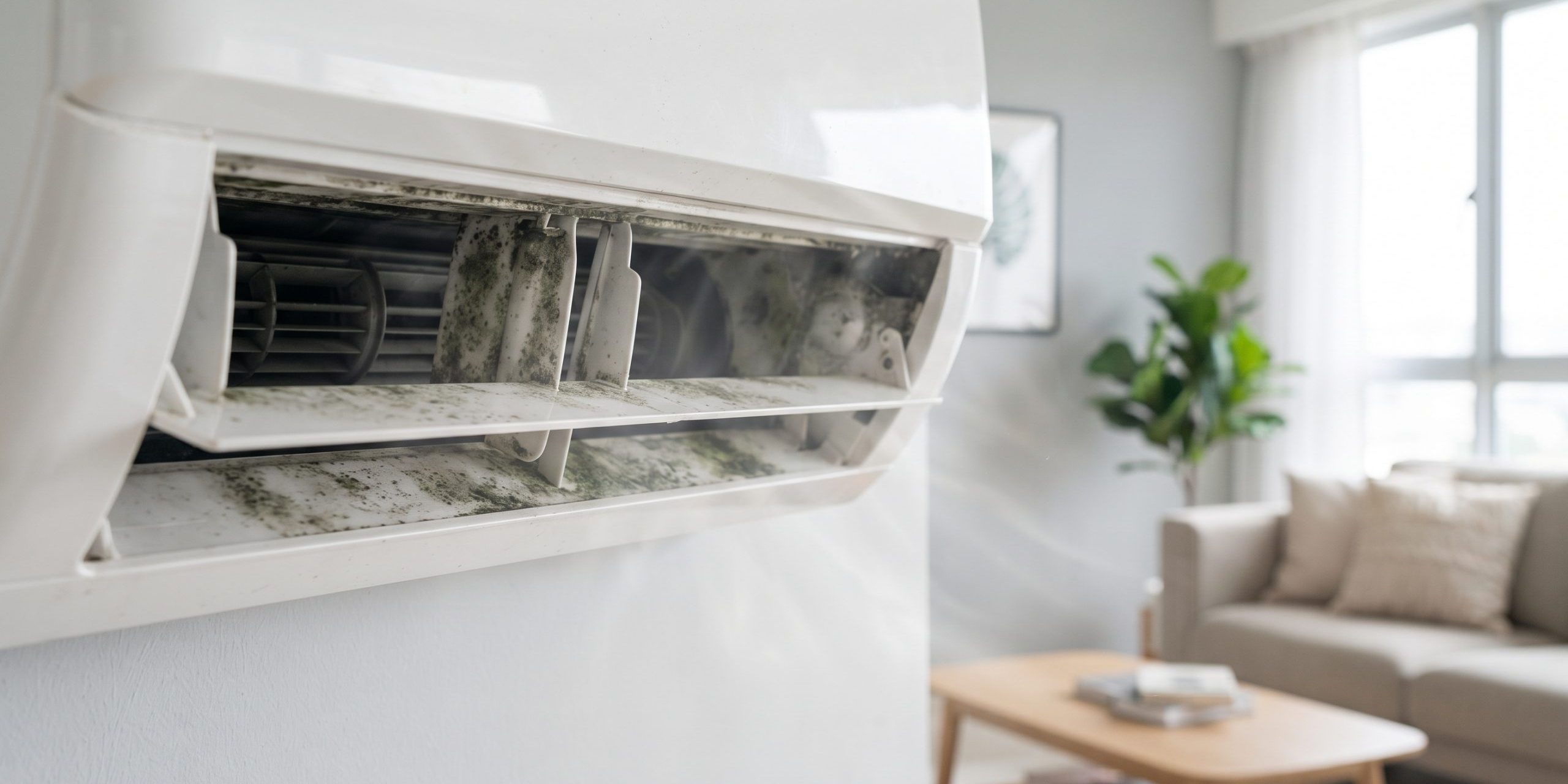
There is nothing better than stepping into a cool, air-conditioned room on a hot day in Singapore. However, when turning on your unit releases a foul, unpleasant odour instead of clean, refreshing air, your system is signaling that something is wrong.
An aircon smell is more than just an inconvenience—it indicates issues ranging from basic mold growth to serious electrical or chemical hazards. Ignoring these odours means continuously recirculating contaminated air throughout your living space.
Primary Causes of Common Aircon Odours
Different types of smells point to specific mechanical, biological, or chemical issues within your air conditioning unit:
- Musty, “Dirty Socks,” or Damp Towel Smell:
- Cause: Mold, mildew, and fungal growth accumulating on the evaporator coils, blower wheel, or inside a clogged drain pan. Stagnant condensation provides an ideal environment for spores to thrive.
- Health Impact: Triggers allergies, asthma flare-ups, and persistent coughing or throat irritation.
- Burning or “Gunpowder” Smell:
- Cause: Overheating or short-circuiting electrical components, such as the blower motor, wiring insulation, or Printed Circuit Board (PCB).
- Risk Level: Critical Fire Hazard.
- Rotten Egg or Sulphur Smell:
- Cause: A trapped, decomposing animal (such as a lizard, rodent, or bird) inside the unit/ducting, or an external natural gas leak being drawn into the return air vent.
- Sweet or “Chemical” Smell:
- Cause: A refrigerant (freon gas) leak originating from cracked cooling coils or damaged copper refrigerant lines.
Troubleshooting Matrix: DIY Checks vs. Professional Repair
Use this guide to determine what actions you can take immediately versus when expert technical repair is required:
| Odour Type | Potential Cause | Safe DIY Action | Professional Repair Needed |
| Musty / Damp | Mold & bacterial buildup | Wash mesh filters under tap water and let them air-dry completely. | Perform deep chemical flushing or full overhaul on coils and drain lines. |
| Burning / Electrical | Short-circuiting PCB or motor | Turn off main wall isolator immediately. Do not attempt to run the unit. | Inspect electrical wiring, replace shorted capacitors, or repair damaged PCB. |
| Rotten Egg / Sulphur | Gas leak OR pest decomposition | Open windows for ventilation; shut off main gas supply if a gas leak is suspected. | Locate and remove pest remains, sanitize internal chassis, or conduct gas checks. |
| Sweet / Chemical | Leaking refrigerant gas | Turn off the system to prevent further gas loss and compressor strain. | Perform nitrogen pressure testing, seal copper pipe leaks, and top up refrigerant. |
How Professional Servicing Eliminates Aircon Odours
Masking bad smells with air fresheners or room sprays only covers up the symptoms while allowing underlying hazards to worsen. A complete technical solution targets the root cause:
- Deep Chemical Overhaul: Full disassembly of the indoor fan coil unit to strip away mold, bio-slime, and stubborn organic residue from hidden surfaces, including the back of coils, blower wheels, and condensate trays.
- Drainage System Flush: Clears stubborn clogs using high-pressure flushing to ensure water drains freely without stagnation.
- Electrical & Gas Diagnostics: Uses specialized testing equipment to locate electrical shorts, verify motor ampers, and detect pinpoint refrigerant leaks along copper lines.
Need Professional Aircon Repair in Singapore?
If your air conditioner is emitting foul odours, blowing warm air, or overdue for routine maintenance, our experienced technicians are ready to diagnose and eliminate the problem safely.
Contact Our Experts Today:
- Company Name: Aircon Servicing & Repair Singapore
- Address: 269 Bukit Batok East Ave 4, Singapore 650269
- Phone: +65 9855 3721
- WhatsApp: Chat on WhatsApp





