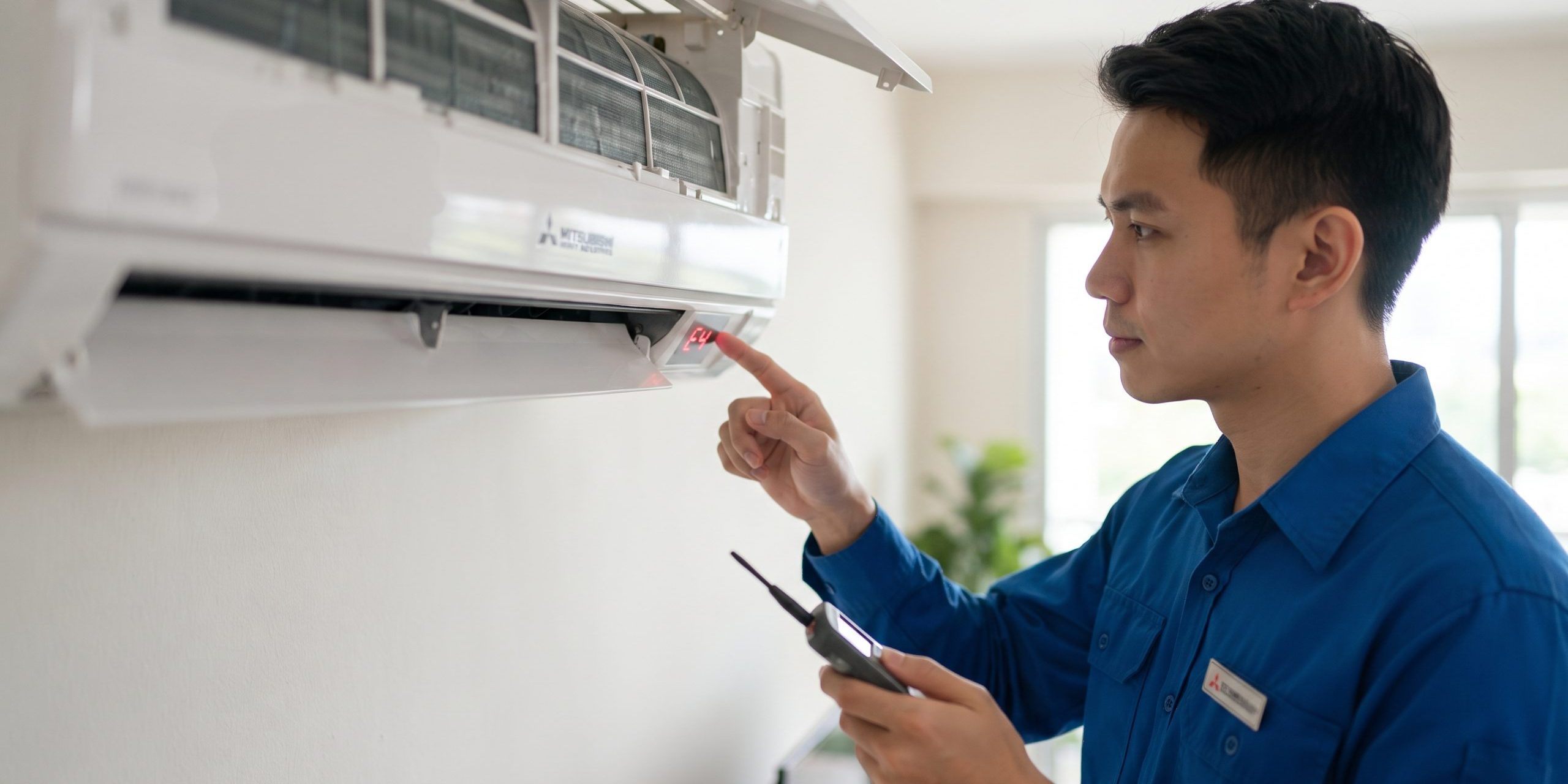
Navigating air conditioning diagnostics for Fujitsu inverter and non-inverter systems in Singapore requires precision, technical understanding, and adherence to safety protocols. When an anomaly occurs, Fujitsu units utilize advanced microcontroller logic to flag errors through blinking LED patterns (Operation, Timer, and Economy indicators) or via digital numeric codes on compatible wired remote controllers.
To maintain peak efficiency across residential and commercial properties, understanding fault classifications is crucial:
- Communication & Control Errors: Signal interruptions between indoor microprocessors, wired controllers, and outdoor inverter PCBs.
- Temperature Sensor Anomalies: Deviations in thermistor resistance across indoor room coils and outdoor condenser units.
- Refrigerant & Pressure Protections: High-pressure spikes, low-pressure gas drops, and compressor discharge overheating limits.
- Mechanical & Drainage Failures: Blocked condensate lines, float switch triggers, and indoor/outdoor fan motor RPM lockups.
1. Step-by-Step Diagnostic & Hard Reset Protocol
Before authorizing major repairs or concluding a system failure, execute this standard troubleshooting sequence:
- Switch Off Main Power Isolation: Turn off the air conditioner using the dedicated wall isolator or main circuit breaker switch. Do not rely solely on the handheld infrared remote control.
- Execute Full Electrical Discharge: Leave the entire system completely powered down for a minimum of 5 to 10 minutes. This allows residual power in electronic capacitors to drain and clears temporary microprocessor glitches.
- Power Back On & Monitor: Restore power to the system, set the thermostat to 22°C in cooling mode, and observe operation. If the error code or flashing indicator lights reappear instantly, a genuine hardware or physical fault is present and requires professional intervention.
2. Complete Fujitsu Aircon Error Code & Flash Reference Matrix (2026)
| Code / LED Flash Pattern | Fault Category | Meaning / Likely Underlying Cause | Severity Level | Recommended Action & Technical Scope | Typical SG Market Cost |
| Code 00 / Flash 1 | Communication | Indoor-outdoor signal transmission breakdown | High | Check outdoor isolator switch, inspect signal wire terminals, or test control board. | Free check – $350 |
| Code 01 / Flash 2 | Sensor Fault | Indoor room temperature thermistor open/short | Medium | Inspect and replace defective indoor thermistor assembly or wiring. | From $130 |
| Code 02 / Flash 3 | Sensor Fault | Indoor evaporator coil sensor anomaly | Medium | Test evaporator pipe sensor resistance; replace if out of specification. | From $130 |
| Code 04 / Flash 5 | Sensor Fault | Outdoor condenser heat exchanger sensor fault | Medium | Inspect outdoor sensor wiring and replace defective condenser thermistor. | From $130 |
| Code 05 / Flash 6 | Sensor Fault | Compressor discharge pipe temperature sensor error | Medium | Replace compressor discharge thermistor to prevent overheating trips. | From $130 |
| Code 09 / Flash 10 | Drainage / Safety | Condensate drain pump or float switch open | Medium | Vacuum drain lines, clear clogged condensate tray or service drainage pump. | From $90 |
| Code 0A / Flash 11 | Fan Motor | Indoor fan motor overload, lock, or feedback error | High | Clear fan dust obstructions; test indoor blower motor and running capacitor. | $200 – $350 |
| Code 0C / Flash 13 | Fan Motor | Outdoor DC fan motor speed or driver error | High | Inspect outdoor fan blade for physical blockage; replace fan motor if faulty. | $200 – $350 |
| Code 11 / Flash 16 | Compressor Protection | Outdoor compressor discharge overheating limit reached | High | Check for low gas or restricted refrigerant flow; inspect electronic expansion valve. | $180 – $400 |
| Code 12 / Flash 17 | Inverter / Power | Compressor overcurrent or IPM (Inverter Power Module) fault | High | Inspect outdoor unit ventilation, wiring terminals, or test inverter power board. | $300 – $600 |
| Code 13 / Flash 18 | Pressure Fault | Outdoor high-pressure protection switch triggered | High | Clean dirty condenser coils; check for airflow restriction or system overcharge. | $90 – $180+ |
| Code 14 / Flash 19 | Pressure Fault | Outdoor low-pressure protection / Refrigerant leakage | High | Perform nitrogen pressure test, locate piping leak point, and recharge gas. | From $180 |
3. DIY vs. Professional Technician Matrix
🛑 WARNING: Operating a high-capacity Fujitsu inverter system with active high-severity error codes (such as IPM malfunctions, high pressure, or communication faults) risks catastrophic compressor burnout and expensive circuit board damage.
🟢 Safe to DIY / Self-Check:
- Monthly Filter Washing: Remove, clean, and thoroughly dry indoor mesh air filters every 2–4 weeks to prevent airflow choke points.
- Power Reset Procedures: Execute a 5-minute hard power reset at the main wall switch to clear temporary electronic glitches.
- Drainage Visual Inspection: Check visible condensate piping outlets for external clogs, slow drainage, or algae buildup.
🔴 Requires Professional Repair:
- Sensor & Thermistor Replacements: Multimeter resistance diagnostic testing and component replacement by certified technicians.
- Refrigerant Handling & Leaks: Nitrogen pressure testing, micro-leak repair, and regulated R32/R410A gas recharging.
- Electrical & Inverter Board Work: High-voltage board diagnostics, communication wiring repair, or motor and IPM replacements.
4. Extended Maintenance Best Practices for Fujitsu Systems
To ensure your Fujitsu air conditioner operates efficiently through Singapore’s intense climate cycles, keep these maintenance guidelines in mind:
- Quarterly Servicing Intervals: Routine general cleaning prevents dust accumulation on aluminum cooling fins, preserving optimal thermal exchange.
- Annual Chemical Overhauls: Essential for heavy-use environments to remove stubborn mold, bacteria, and grease from the internal blower wheel.
- Immediate Attention to Minor Symptoms: Addressing unusual rattling sounds, weak airflow, or minor water dripping early prevents costly emergency breakdowns.