



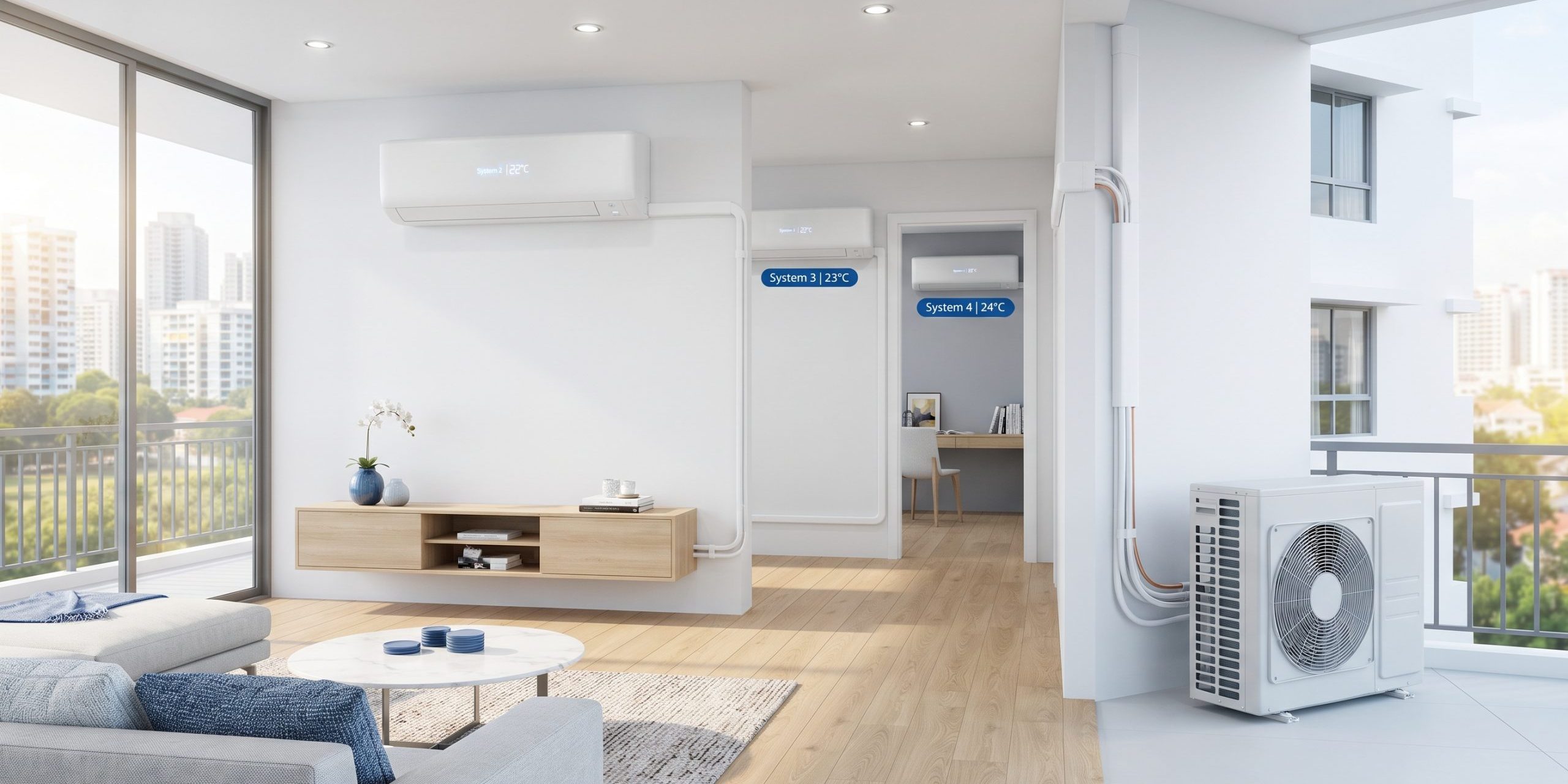
Choosing the right fan speed on your air conditioner isn’t just about personal comfort—it directly impacts your monthly electricity bills, room cooling speed, humidity control, and long-term equipment wear. In Singapore’s tropical climate, understanding when to use High, Low, or Auto mode can optimize both your comfort and energy savings.
Brought to you by Aircon Servicing & Repair Singapore (Located at 269 Bukit Batok East Ave 4, Singapore 650269 | Phone: +65 9855 3721).
1. Overview & Fan Speed Fundamentals
Aircon indoor blower fans circulate air across the cold evaporator coils to distribute chilled air throughout your room. Each fan speed setting serves a distinct thermodynamic purpose:
- High Fan Speed: Maximizes air volume moving across the coils, rapidly pulling heat out of the room and ensuring fast cooling. However, it operates at a higher decibel level.
- Low Fan Speed: Operates quietly, making it ideal for sleeping. It keeps air moving gently, but cools rooms more slowly and reduces moisture removal efficiency.
- Auto Fan Speed: Smart inverter logic that dynamically adjusts fan speed based on the temperature difference between your current room temperature and your remote setpoint.
2. Step-by-Step: How to Choose and Optimize Your Aircon Fan Speed
Practical Selection Steps
- Upon Initial Startup (Use High): When entering a warm room after returning home, set the fan to High for the first 15–20 minutes to rapidly dump heat and accelerate cooling.
- Once Comfort is Reached (Switch to Auto or Low): Transition to Auto mode to let the inverter compressor and blower balance efficiency, or select Low for quiet nighttime sleep.
- During High Humidity / Rainy Days (Use Medium/High): Keeping airflow steady ensures continuous condensation over coils, pulling excess humidity out of the air to prevent sticky indoor discomfort.
Step-by-Step Maintenance Routine
- Keep Blower Wheels Clean: Dust and mold accumulation on indoor fan drums restrict airflow across all speeds, forcing the motor to work harder.
- Wash Air Filters Bi-Weekly: Clean filters allow your fan to move maximum air volume smoothly without strain.
3. Comprehensive Aircon Fan Speed Comparison Table
| Fan Speed Mode | Best Used For | Energy Efficiency | Noise Level | Key Operational Advantage | Typical Maintenance Impact |
| High Speed | Quick cool-down upon entering a hot room; large living spaces. | Moderate | Moderate to High | Lowers room temperature fastest by maximizing heat exchange. | Puts higher load on motor bearings over time if left running indefinitely. |
| Low Speed | Quiet nighttime sleeping; study rooms requiring silence. | High | Ultra-Low (Quiet) | Minimizes acoustic disturbance and prevents direct draft chills. | Can lead to ice formation if evaporator coils are dirty and airflow drops too low. |
| Auto Mode | General daily use; balanced energy savings and hands-free control. | Maximum | Variable | Dynamically scales speed up or down based on thermal load. | Optimizes electricity consumption and reduces unnecessary motor wear. |
4. DIY vs. Professional Optimization Matrix
⚠️ CRITICAL WARNING FOR AIRCON FAN ISSUES
If changing fan speeds on your remote produces no change in blower velocity, or if you hear loud scraping, squealing, or rattling noises, your indoor fan motor or capacitor may be failing. Shut down the system and contact Aircon Servicing & Repair Singapore at +65 9855 3721 for expert assistance.
🟢 Safe to DIY
- Selecting Optimal Modes: Switching between High, Low, and Auto profiles on your remote based on time of day and room occupancy.
- Washing Air Filters: Removing and washing indoor mesh filters every two weeks to ensure unhindered airflow across fan blades.
- Adjusting Louvers: Changing physical or remote louver directions to distribute airflow evenly without direct drafts.
- Basic Power Reset: Performing a 5-minute breaker shutdown to clear minor remote command glitches.
🔴 Requires Professional Technician
PCB Relay Repairs: Fixing damaged electronic control boards that fail to send correct voltage signals to the fan motor.
Blower Wheel Deep Cleaning: Stripping away stubborn mold and dust sludge choking the indoor fan drum that blocks airflow.
Fan Motor & Bearing Replacements: Swapping out worn, squealing, or seized blower motors.
Capacitor Replacements: Replacing faulty indoor capacitors responsible for fan speed control failures.





