



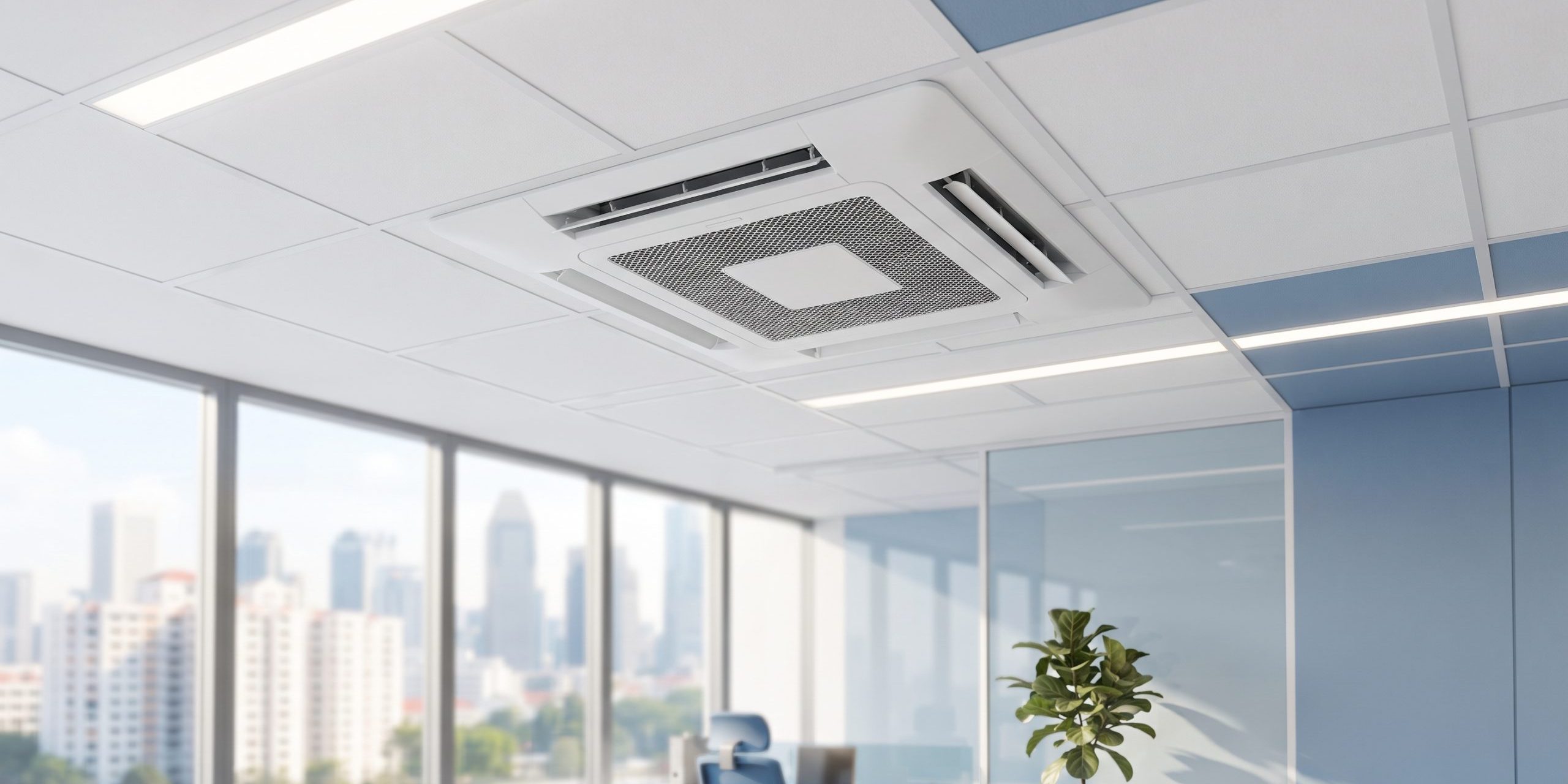
When planning interior designs or upgrading cooling systems for larger apartments, landed properties, or commercial spaces in Singapore, standard wall-mounted split air conditioners are not always the best fit. This is where Ducted and Cassette air conditioning systems come into play. While both are ceiling-installed solutions that save valuable wall space, they operate using entirely different engineering architectures.
1. Overview & Core Differences
Understanding how ducted and cassette systems function helps determine which setup suits your property layout:
- Ducted Aircon Systems (Centralized Concealed Cooling): The main fancoil unit is hidden entirely within the false ceiling or roof space. Cool air is distributed through a network of insulated flexible ducts and delivered into various rooms via discreet ceiling or wall grilles/diffusers. It offers a seamless, minimalist aesthetic where only sleek grilles are visible.
- Cassette Aircon Systems (Flush Ceiling Mounted): A cassette unit is mounted directly into the ceiling grid, with its decorative square panel sitting flush against the surface. Instead of using hidden duct networks, it blows conditioned air directly outward in multiple directions (2-way, 4-way, or 360-degree round flow) from a single centralized unit.
2. Selection & Installation Guide
1.Evaluate Ceiling Clearance & Space:
Check your false ceiling height. Ducted systems require significant vertical clearance above the ceiling to house bulky ductwork, whereas cassette units fit comfortably within standard false ceiling depths.
2.Determine Zone Control Needs:
Choose a ducted system if you want multi-room zoning capabilities to cool multiple closed rooms independently. Opt for a cassette unit if you are cooling a large, open-concept space.
3.Assess Aesthetic Priorities:
If interior design calls for total hardware invisibility (such as luxury homes or executive boardrooms), choose ducted. If you need powerful, uniform multi-directional airflow with easy access, choose a cassette.
4.Plan for Maintenance Access:
Ensure your contractor builds appropriate access panels (manholes) for ducted systems to service hidden fan motors and drainage lines.
3. Reference Table: Ducted vs. Cassette Aircon Comparison
| Feature / Metric | Ducted Aircon System | Cassette Aircon System |
| Design & Visibility | Completely concealed behind ceilings; only vents/grilles visible. | Mounted flush into the ceiling; decorative louver panel is visible. |
| Airflow Distribution | Routed through ducts to precise locations via linear diffusers. | 4-way or 360° multi-directional airflow from a central point. |
| Best Suited For | Multi-room apartments, large bungalows, offices with multiple partitioned rooms. | Open-concept living areas, retail shops, restaurants, and large corporate spaces. |
| Noise Level | Exceptionally quiet because the main blower motor is hidden away in the ceiling void. | Very quiet, though direct fan operation is close to the room occupants. |
| Initial Investment | Higher upfront cost due to complex custom ductwork design and installation. | Moderate installation cost; faster and simpler to fit into existing ceiling frameworks. |
4. DIY vs. Professional Maintenance Matrix
⚠️ Warning: Never attempt to modify ceiling duct layouts, alter refrigerant lines, or service internal electrical wiring on ducted and cassette systems without professional certification, as mistakes can cause major ceiling water leaks or electrical shorts.
🟢 Safe to DIY / Self-Check
- Filter Cleaning: Removing and washing the accessible return-air filters (for cassettes or ducted return grilles) every 2 weeks.
- Remote & Thermostat Settings: Adjusting fan speeds, temperature setpoints, and scheduling operational timers.
- Visual Checks: Inspecting ceiling vents for dust buildup, condensation rings, or unusual airflow restrictions.
🔴 Requires Professional Servicing & Repair
- Chemical Overhauls: Deep-pressure cleaning of internal evaporator coils, blower wheels, and condensate drain pans.
- Ductwork Inspection & Sealing: Checking flexible ducts for tears, air leaks, or insulation degradation that wastes cooling energy.
- Drain Pump Diagnostics: Servicing the built-in condensate drain pumps common in cassette and low-profile ducted units to prevent ceiling leaks.
- Refrigerant Pressure Checks: Conducting leak tests and precise gas recharges for split or multi-split compressor configurations.





