



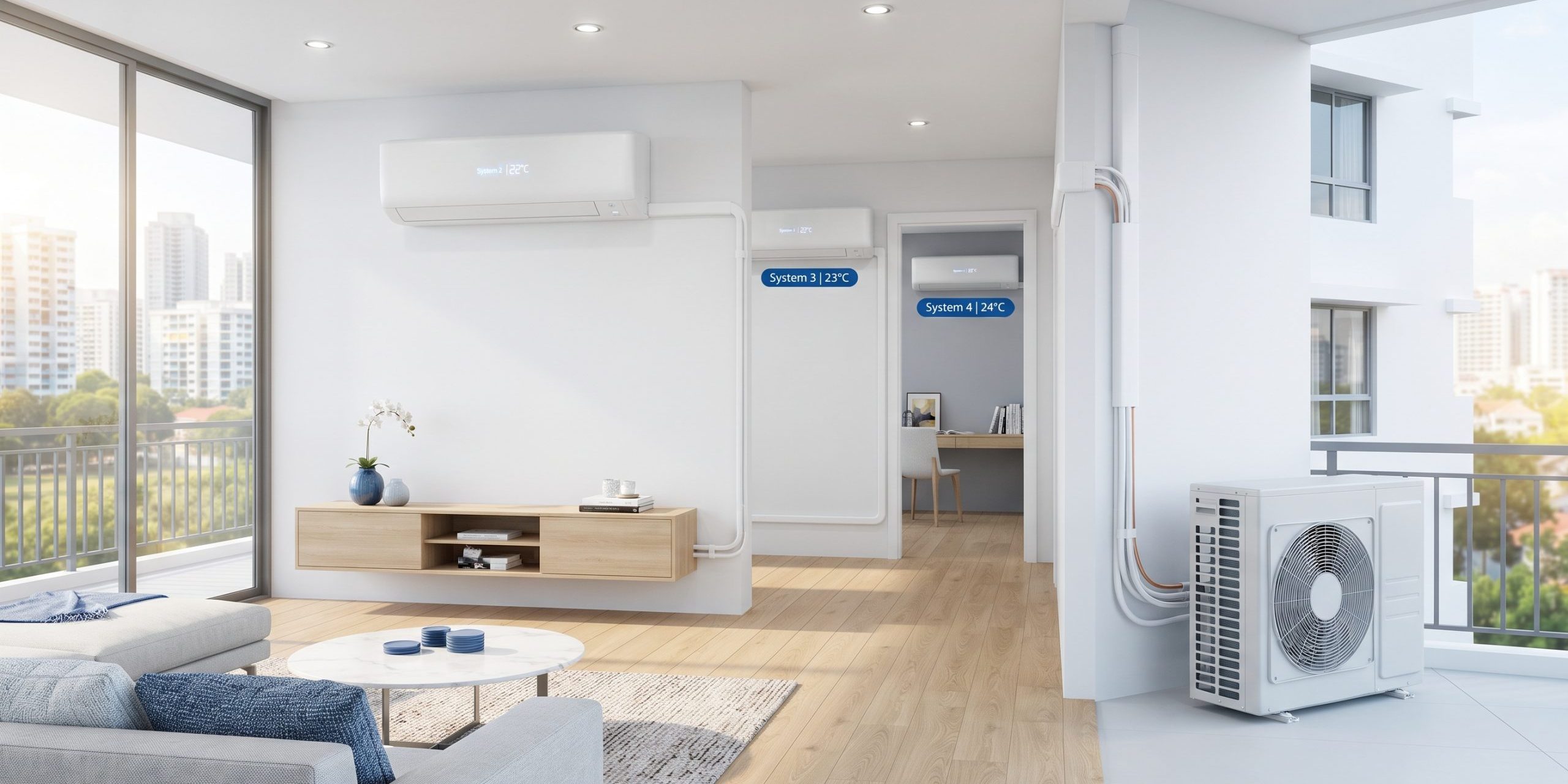


Air conditioning typically accounts for the largest share of household and commercial electricity bills in Singapore. With tropical weather requiring air units to run for extended hours, understanding how much electricity an aircon consumes—and how to optimize its efficiency—helps you keep monthly utility costs under control.
The industry categorizes aircon electricity consumption and efficiency factors into distinct operational groups:
- BTU Capacity & Room Size: Matching the correct cooling capacity (e.g., 9,000 BTU vs. 18,000 BTU) to prevent overworking the compressor.
- Inverter Technology: Energy-saving inverter compressors that adjust speeds smoothly versus older non-inverter units running at full power continuously.
- NEA Energy Labels (Tick Ratings): 4-tick or 5-tick high-efficiency models that consume significantly less electricity over time.
- Usage Habits & Temperature Settings: Operating temperatures (e.g., setting at 23°C to 25°C) combined with timer schedules and fan usage.
1. How to Calculate and Lower Your Aircon Electricity Consumption
- Optimize Your Thermostat Setting: Set your aircon temperature between 23°C and 25°C. Every degree lower increases electricity consumption by approximately 3% to 5%.
- Pair with Ceiling or Standing Fans: Using a ceiling fan alongside your aircon allows you to set the temperature 1°C to 2°C higher while feeling just as cool, significantly reducing compressor workload.
- Keep Coils and Filters Clean: Dust-choked coils and dirty filters restrict airflow, forcing the compressor to draw more electrical current to achieve the desired cooling.
2. Singapore Aircon Electricity Cost Reference Table (2026)
| System Type / Capacity | Average Power Consumption | Daily Usage (8 Hours) | Estimated Monthly Electricity Cost (SP Group Rates ~ $0.32/kWh) | Recommended Optimization Strategy |
| System 1 (9k BTU – 1 Tick) | ~ 1.0 kWh to 1.2 kWh | 8.0 kWh – 9.6 kWh | $77 – $92 / month | Upgrade to inverter 5-tick model to cut consumption by 30%. |
| System 1 (9k BTU – 5 Tick Inverter) | ~ 0.6 kWh to 0.8 kWh | 4.8 kWh – 6.4 kWh | $46 – $61 / month | Run on Auto fan mode with temperature set at 24°C. |
| System 3 (Multi-Split 3 Units Active) | ~ 2.2 kWh to 3.0 kWh | 17.6 kWh – 24.0 kWh | $169 – $230 / month | Close doors to unused rooms and use timer functions. |
| System 4 (Full HDB Multi-Split Running) | ~ 3.5 kWh to 4.5 kWh | 28.0 kWh – 36.0 kWh | $268 – $345 / month | Schedule quarterly chemical servicing to maintain peak energy efficiency. |
| Portable Aircon Unit (10k BTU) | ~ 1.2 kWh to 1.5 kWh | 9.6 kWh – 12.0 kWh | $92 – $115 / month | Use only as temporary cooling; exhaust hot air completely outside. |
3. DIY vs. Professional Energy Optimization Matrix
🛑 WARNING: Neglecting routine aircon maintenance forces the compressor to draw excess electrical current, driving up your power bills and increasing the risk of premature motor burnout.
🟢 Safe to DIY / Self-Check:
- Monthly Filter Cleaning: Wash and dry indoor mesh filters every 2 to 4 weeks to ensure smooth, unhindered airflow.
- Smart Scheduling: Utilize remote control timers or smart thermostats to shut down cooling units automatically when rooms are unoccupied.
- Seal Room Insulation: Keep doors and windows tightly shut and use door drafts stoppers to prevent cool air from escaping.
🔴 Requires Professional Technician Intervention:
- Chemical Overhauls: Deep cleaning caked dust and grime from indoor coils and blower wheels to restore 100% heat transfer efficiency.
- Refrigerant Pressure Checks: Fixing gas leaks and verifying proper refrigerant charge, as low gas forces compressors to run continuously without cooling effectively.
- Electrical & Inverter Diagnostics: Inspecting high-voltage capacitors, electrical current draw, and inverter PCB performance.
4. Summary Tips to Cut Aircon Electric Bills
To maintain low electricity bills throughout the year in Singapore, adhere to these maintenance and usage habits:
- Routine Servicing: Schedule general servicing every 3 months to keep electrical draw at optimal manufacturer levels.
- Annual Chemical Washes: Remove stubborn internal grime that blocks airflow and hikes power consumption.
- Energy-Efficient Habits: Turn off units when leaving rooms for extended periods and utilize eco/sleep modes.





