



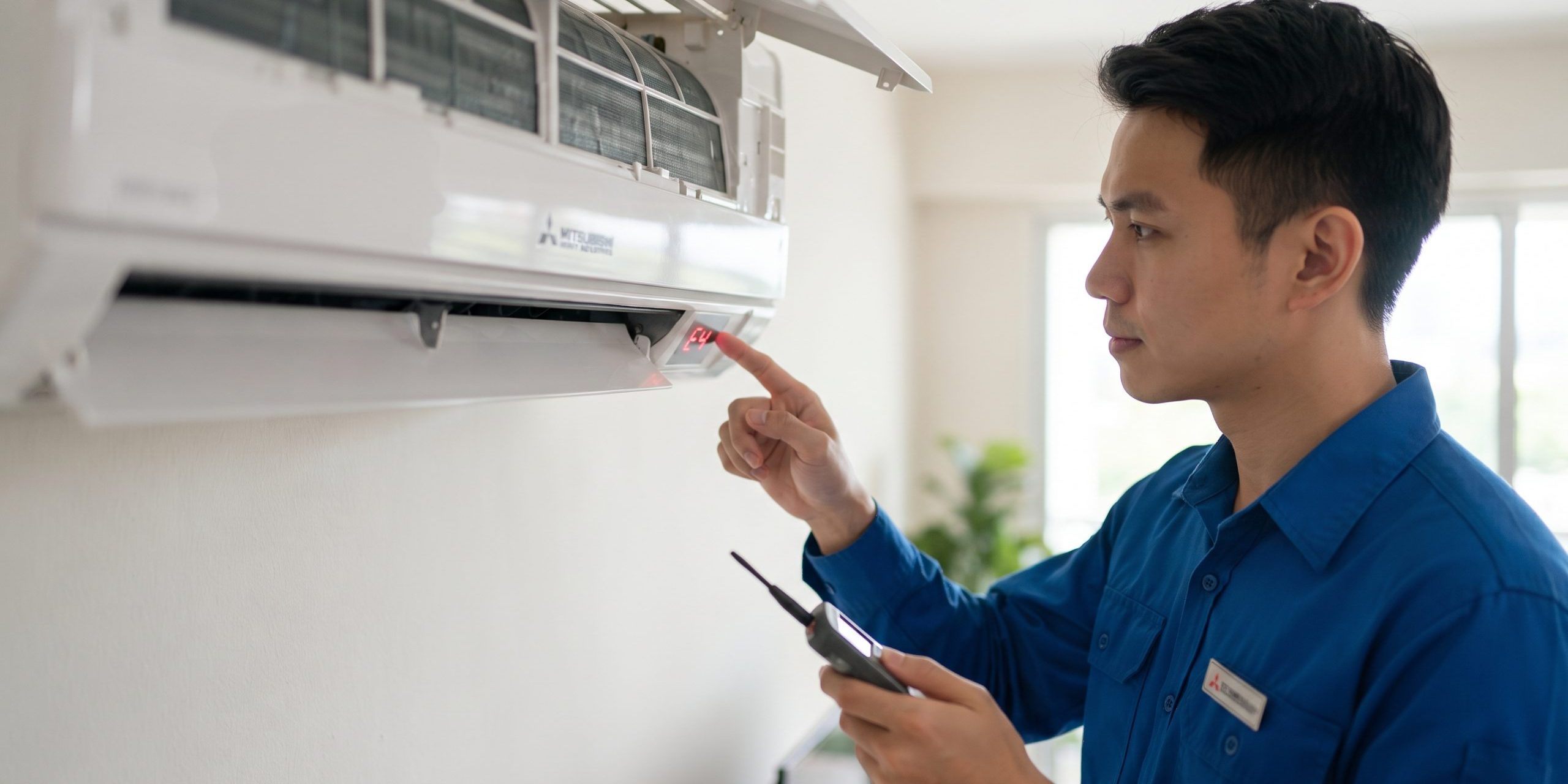
Carrier air conditioning systems feature an intelligent self-diagnostic framework. When an abnormality occurs, the unit displays an alphanumeric error code on the indoor unit’s digital panel or wired remote controller.
1. Error Code Category Overview
Carrier error codes are categorized by letter prefixes indicating the specific system domain:
- E Series (System & Sensor Faults): Covers EEPROM errors, internal communication failures, indoor fan motor speed irregularities, and room/evaporator sensor issues.
- F Series (Outdoor & Temperature Sensors): Covers outdoor ambient sensors, condenser coil sensors, compressor discharge thermistors, and outdoor motor faults.
- P Series (Inverter & Electrical Protection Trips): Covers Intelligent Power Module (IPM) failures, voltage instability, compressor top overheating, and drive circuit faults.
- H / Special Series (Hardware & System Cycles): Signals system defrost operation (H1) or hardware/module protection limits.
2. Step-by-Step Display Reading & Reset Guide
Follow these steps to safely read and reset your Carrier aircon display:
- Note the Display Code: Locate the two-digit code flashing on the indoor LED display or wired remote controller. Write down the code or snap a quick photograph.
- Power Off at the Wall Switch/Breaker: Turn off the air conditioner using the remote, then isolate the power completely by switching off the main wall switch or circuit breaker.
- Wait 5 Minutes: Allow 5 full minutes for the system’s capacitors to discharge completely and reset the main control board memory.
- Restore Power & Test: Turn the circuit breaker back on and start the unit via the remote controller.
- Evaluate Result:
- Code Cleared: The error was a temporary glitch (e.g., minor power fluctuation).
- Code Reappears: A physical hardware, sensor, or pressure fault is present and requires targeted repair.
3. Comprehensive Error Code Reference Table
| Code | Meaning / Possible Cause | Severity | Recommended Action | Typical Repair Cost (SGD) |
| E0 | Indoor EEPROM Parameter Error | 🔴 High | Board-level diagnostic required; reprogram EEPROM or replace indoor PCB. | $130 – $300 |
| E1 | Indoor / Outdoor Communication Failure | 🔴 High | Verify outdoor isolator switch is ON; check communication wiring & PCB terminals. | $80 – $300 |
| E2 | Zero-Crossing Signal Error / Anti-Freeze Protection | 🟡 Medium | Clean dirty air filters/coils; verify power supply frequency. | $90 – $130 |
| E3 | Indoor Fan Speed Out of Control | 🔴 High | Inspect fan motor bearings & wheel; replace indoor blower motor if locked. | $200 – $350 |
| E4 | Indoor Room Temp Sensor (T1) Fault | 🟡 Medium | Check sensor terminal connections; replace room thermistor. | From $130 |
| E5 | Evaporator Coil Temp Sensor (T2) Fault | 🟡 Medium | Check sensor wiring; replace evaporator coil thermistor. | From $130 |
| EC | Refrigerant Leakage Detected | 🔴 High | Perform nitrogen pressure test, locate & seal leak, then recharge gas. | From $180 |
| F1 | Outdoor Ambient Temp Sensor (T4) Fault | 🟡 Medium | Inspect outdoor thermistor wiring; replace ambient sensor. | From $130 |
| F2 | Condenser Coil Temp Sensor (T3) Fault | 🟡 Medium | Inspect outdoor coil thermistor connections; replace sensor. | From $130 |
| F3 | Compressor Discharge Sensor (T5) Fault | 🟡 Medium | Replace discharge thermistor (critical to prevent compressor overheating). | From $130 |
| F4 | Outdoor Unit EEPROM Parameter Error | 🔴 High | Reprogram outdoor EEPROM chip or replace main outdoor PCB assembly. | $130 – $600 |
| F5 | Outdoor Fan Speed Out of Control | 🔴 High | Clear physical obstructions in fan blades; replace outdoor fan motor. | $200 – $350 |
| P0 | IPM Malfunction / Over-Current Protection | 🔴 High | Ensure proper outdoor ventilation; inspect/replace inverter drive PCB. | $300 – $600 |
| P1 | Over / Under Voltage Protection | 🔴 High | Check mains power stability; resolve household supply issues or add stabilizer. | $80 – $300 |
| P2 | Compressor Top Temperature Overheat | 🔴 High | Switch off unit immediately; clean blocked coils or repair gas deficiency. | From $180 |
| P4 | Inverter Compressor Drive Error | 🔴 High | Professional electronic diagnosis required; replace inverter power module. | $300 – $600 |
| H1 | Defrost Cycle Active | 🟢 Low | Normal operation during cold heating cycles; wait 5–10 mins for completion. | $0 |
4. DIY vs. Professional Repair Matrix
🟢 Safe to DIY
- Filter Maintenance: Cleaning dust-clogged filters to resolve minor airflow restrictions or coil icing (E2).
- Clear Outdoor Obstructions: Removing leaves, debris, or dust buildup around the outdoor condenser coil.
- Isolator Check: Verifying that the outdoor unit’s isolator switch hasn’t tripped (resolves simple E1 codes).
- Hard Reset: Performing a 5-minute circuit breaker power cycle.
🔴 Requires Professional Repair
- Refrigerant Line Service: Pressure-testing piping, repairing gas leaks, and vacuum-recharging refrigerant (EC, P2).
- Electrical & Board Diagnostics: Replacing PCB control boards, reprogramming EEPROM chips, or fixing IPM modules (E0, F4, P0, P4).
- Sensor & Motor Swaps: Replacing internal thermistors or replacing indoor/outdoor fan motors (E3, E4, E5, F1–F5).
🚨 CRITICAL SAFETY WARNING: High-severity codes such as EC (refrigerant leak), P0/P4 (IPM inverter failure), and P2 (compressor overheat) indicate critical operational risks. Continuing to run your air conditioner under these conditions can cause permanent compressor destruction or total electrical component burnout. Turn off the air conditioner at the isolator switch immediately when these codes appear.





